Calm is one of the most popular meditation and wellness apps in the world. With over 100 million downloads and a library of hundreds of guided meditations, celebrity-narrated Sleep Stories, focus music, and movement exercises, Calm offers a polished, all-in-one relaxation experience that millions use daily.
But as your needs evolve, you may find that a single app can’t cover everything. Maybe you want meditation that adapts to your mood each day instead of browsing a large library. Maybe you need a community of fellow practitioners for accountability. Maybe sleep is your primary challenge and you need specialized sound tools. Or maybe you’ve realized that self-guided meditation alone isn’t enough, and you’re ready to work with licensed clinicians.
That’s where this guide comes in. Whether you’re looking to:
We’ll walk through Calm app alternatives that excel in each of these areas.
Some readers might pair one or two of these tools with their existing Calm subscription, while others might switch entirely. This isn’t about finding a “better” app; it’s about finding the right fit for where you are right now.
Let’s look at the Calm alternatives and see which ones fit your needs.
|
Starts at: Free |
Making Therapy BetterBest Alternative for Tracking Whether Your Mental Health Is Actually Improving
Making Therapy Better is a free app designed by leading psychotherapy researcher Bruce Wampold, PhD that uses validated clinical assessments to track your symptoms, wellbeing, and therapeutic relationship weekly — giving you objective data on whether your meditation practice, therapy, or both are producing real results. |
|
Starts at: $12.99/mo |
HeadspaceBest Alternative for Structured, Science-Backed Meditation with Clinical Mental Health Support
Headspace combines progressive meditation courses with access to licensed therapists and coaches through Headspace Care, covering mental health support from self-guided mindfulness to professional clinical services. |
|
Starts at: Free (1-year trial); $69.99/yr |
BalanceBest Alternative for AI-Driven Daily Personalization
Balance assembles unique meditations from thousands of audio files based on daily mood check-ins, creating an adaptive experience. Its one-year free trial gives you a full year to build a practice before any financial commitment. |
|
Starts at: Free; $59.99/yr (MemberPlus) |
Insight TimeBest Free Alternative for Community-Driven Meditation with Teacher Diversity
Insight Timer provides over 250,000 free guided meditations from 20,000+ teachers worldwide, live events every hour, and a community of 32 million practitioners, making it the largest free meditation resource available. |

|
Starts at: $9.99/mo |
BetterSleepBest Alternative for Customizable Sleep Sound Engineering and Sleep Tracking
BetterSleep offers 300+ sleep sounds with unlimited layering, built-in sleep tracking, and scientific audio technologies like binaural beats, making it the most specialized sleep tool on this list. |

|
Starts at: $19.99/mo |
Waking UpBest Alternative for Intellectual Meditation and Consciousness Exploration
Created by neuroscientist Sam Harris, Waking Up teaches the philosophy and science behind meditation through multi-tradition practices and conversations with leading thinkers, built for those wanting depth beyond relaxation. |

|
Starts at: Free forever |
MeditoBest Alternative for a Completely Free, Nonprofit Meditation Experience
Medito is a registered nonprofit that provides every meditation, course, and sleep resource free, with no ads, no data collection, and open-source transparency, backed by a peer-reviewed University of Bath study. |

|
Starts at: Free (MBC); $49/mo (EHR) |
CarePathsBest Option When You're Ready to Explore Professional, Measurement-Based Therapy
If you've been relying on meditation apps for mental health and feel you need more support, CarePaths connects you with licensed therapists who use measurement-based care to track real outcomes, a step beyond what any self-guided app can offer. |
Calm is a meditation, sleep, and relaxation app designed to help people reduce stress, sleep better, and build mindfulness habits. With over 100 million downloads and a library spanning guided meditations, sleep content, focus music, and educational masterclasses, Calm has become one of the most recognized names in digital wellness.
Its key features include:
Calm’s strength is how these features come together in one well-designed package. The soothing interface, the breadth of content, and the production quality (especially the celebrity Sleep Stories) create a relaxation experience that feels effortless to use.
That said, Calm’s content-library approach means you browse and select from hundreds of options each time you open the app. For some users, that variety is a strength. For others, it leads to decision fatigue, especially when what they need is more targeted support: adaptive personalization, specialized sleep tools, community connection, or professional therapy.
If meditation alone isn’t giving you the results you need, you’re not alone.
At some point, many people benefit from working with a licensed therapist alongside their mindfulness practice.
After testing Calm and researching the broader wellness and mental health app market, we found that users often reach a point where they need more than a single meditation app can offer. While Calm delivers a polished relaxation experience, many users discover they need specialized tools for:
Each tool on this list stands out in one of these areas. You might use them alongside Calm or as a standalone replacement, depending on your goals.
❗DISCLAIMER: We aren't covering every meditation or wellness tool. Our focus is on the best alternatives that address specific needs, Calm's broad content-library approach may not fully serve.
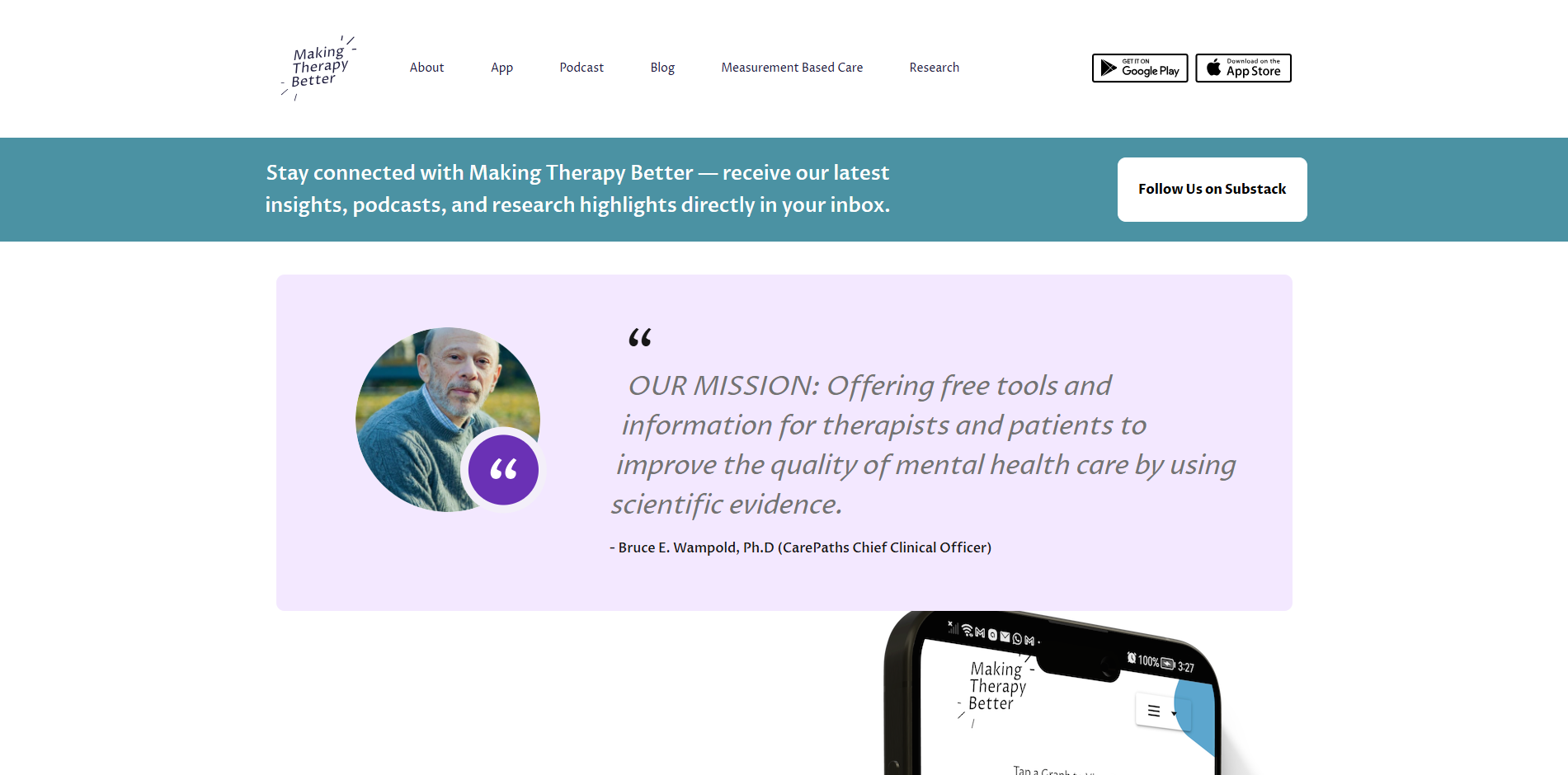
Every other app on this list helps you meditate, sleep, or relax. Making Therapy Better does something fundamentally different: it helps you measure whether your mental health is actually getting better — whether you’re using meditation apps, working with a therapist, or both.
Created by Dr. Bruce Wampold, one of the most cited psychotherapy researchers in the world, Making Therapy Better is a free app built around Measurement-Based Care (MBC) — the practice of routinely tracking symptoms, wellbeing, and your relationship with your therapist using validated clinical instruments. MBC is recommended as an evidence-based practice by both the APA and the American Psychiatric Association, and the app displays endorsements from the AMA, APA, CPA, and NIH.
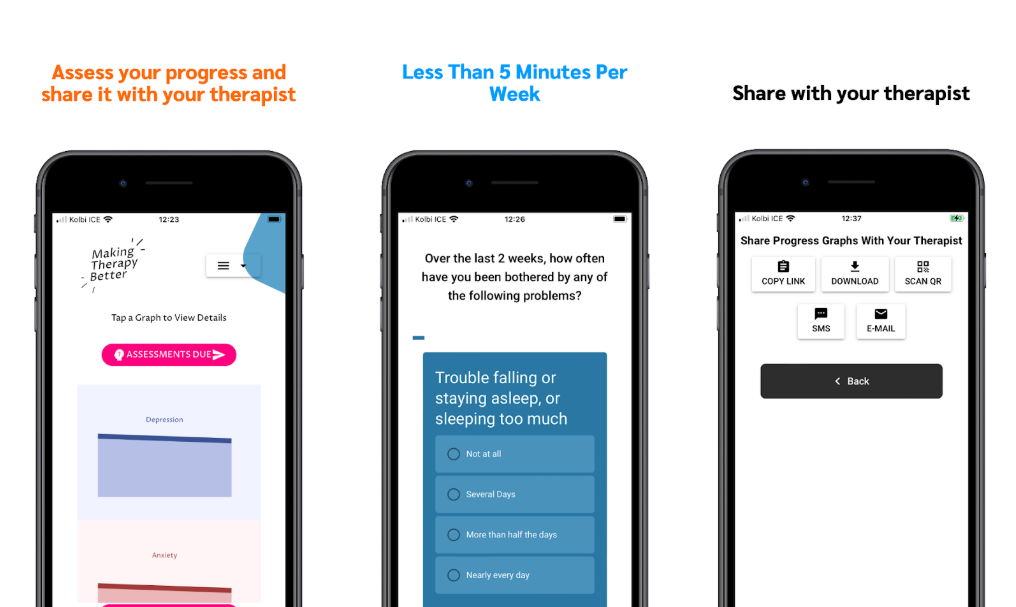
Its key capabilities include:
Making Therapy Better stands out compared with Calm in several ways:
Clinical measurement vs. casual check-ins. Calm offers mood check-ins, sleep logs, and gratitude journaling — useful for self-reflection, but built for engagement rather than clinical insight. Making Therapy Better uses validated clinical instruments — the same standardized assessments used in research and clinical practice — to track depression, anxiety, wellbeing, loneliness, and the quality of your therapeutic relationship. The difference is between journaling how you feel and measuring how you’re doing with tools designed to detect meaningful change.
Designed by a leading psychotherapy researcher, not a product team. The assessment protocol was designed by Bruce Wampold, PhD, author of 200+ peer-reviewed articles and 8 books including The Great Psychotherapy Debate, and a Fellow of the American Psychological Association. In January 2025, the APA’s Monitor on Psychology featured Wampold’s MBC approach as a transformative development in treatment. This level of research credibility is unmatched by any consumer wellness app.
A bridge between self-care and professional therapy. If you’re currently in therapy, Making Therapy Better gives you structured data to bring into sessions — replacing vague recollections of “how the week went” with actual trend lines. The app even provides scripted language to help you introduce MBC to your therapist. If you’re not in therapy but using meditation apps for mental health, the app’s weekly assessments can help you determine whether self-guided tools are producing measurable improvement — or whether it’s time to seek professional support.
Source: Making Therapy Better
If you need more comprehensive care: Making Therapy Better is an initiative of CarePaths Inc., a behavioral health EHR platform founded by clinical psychologists. For therapists who want to integrate MBC directly into their practice with automated assessments, patient charting, and Remote Therapeutic Monitoring billing, CarePaths EHR provides the full clinical infrastructure — including a free tier for practices serving up to 30 clients.
Making Therapy Better is completely free:
For therapists interested in the full EHR platform, CarePaths offers a free plan for up to 30 clients, with paid plans starting at approximately $49/therapist/month.
Choose Making Therapy Better if:
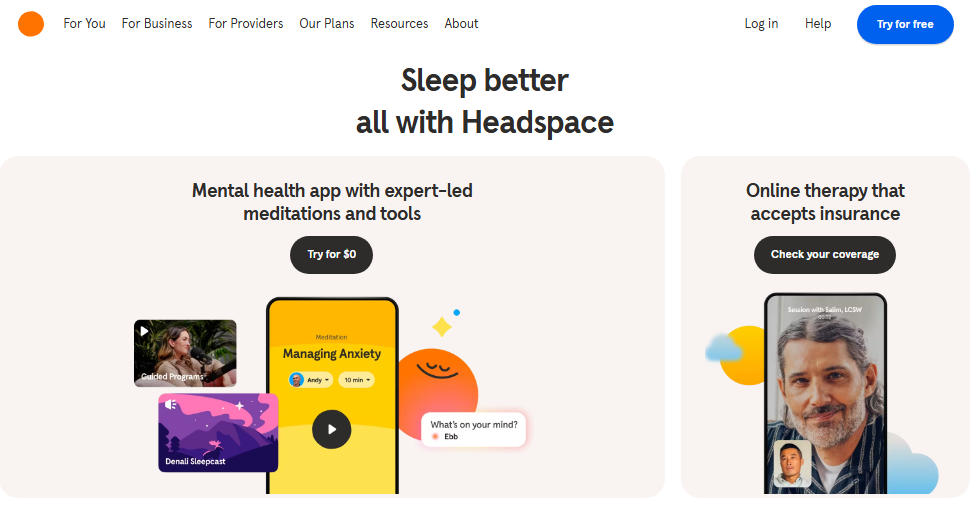
Headspace is a digital mental health platform that has grown well beyond its origins as a meditation app. Co-founded by Andy Puddicombe, a former Buddhist monk, Headspace now covers care from self-guided mindfulness training to professional coaching, therapy, and psychiatry.
Its key capabilities include:
Headspace stands out compared with Calm in several areas:
Integrated clinical care.
While Calm focuses on meditation and relaxation content, Headspace has evolved into a full mental health platform. Through Headspace Care, users can text a mental health coach within minutes, schedule therapy within about a day, and access psychiatrists for medication management.
If your needs grow beyond self-guided meditation, you move up the care ladder within the same app. Calm remains focused on wellness content without access to licensed clinicians.
Structured teaching approach.
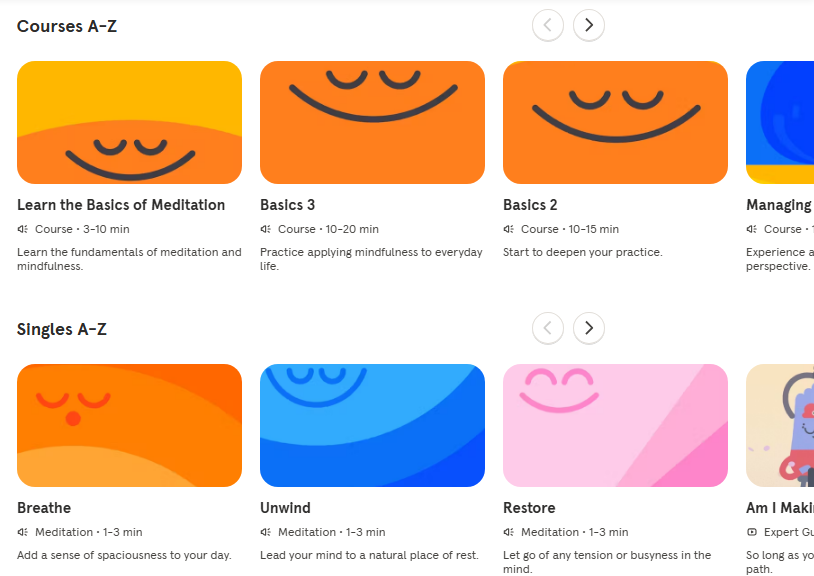
Headspace follows a more educational framework than Calm’s open library. New users begin with “The Basics,” a course that teaches meditation techniques and mindfulness principles in a progressive sequence. This structure helps beginners who feel overwhelmed by choice or uncertain where to start.
Calm offers “7 Days of Calm” and “21 Days of Calm” as beginner options, but without the same progression through increasingly advanced concepts.
Source: Headspace
We also evaluated Insight Timer and Balance as structured meditation alternatives. While Insight Timer offers the largest free meditation library with a strong community focus, and Balance provides personalized meditation based on daily check-ins, Headspace offers the most complete integration of structured meditation training with professional mental health services, making it the top choice for users who want both mindfulness tools and access to clinical care.
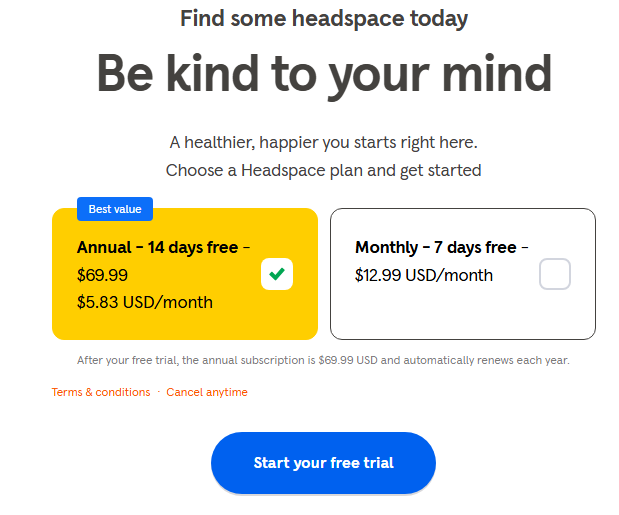
Headspace operates on a subscription model:
Headspace Care clinical services (coaching, therapy, psychiatry) may be covered through employer benefits or health insurance plans. Headspace for Organizations offers custom enterprise pricing.
Source: Headspace
Choose Headspace if:
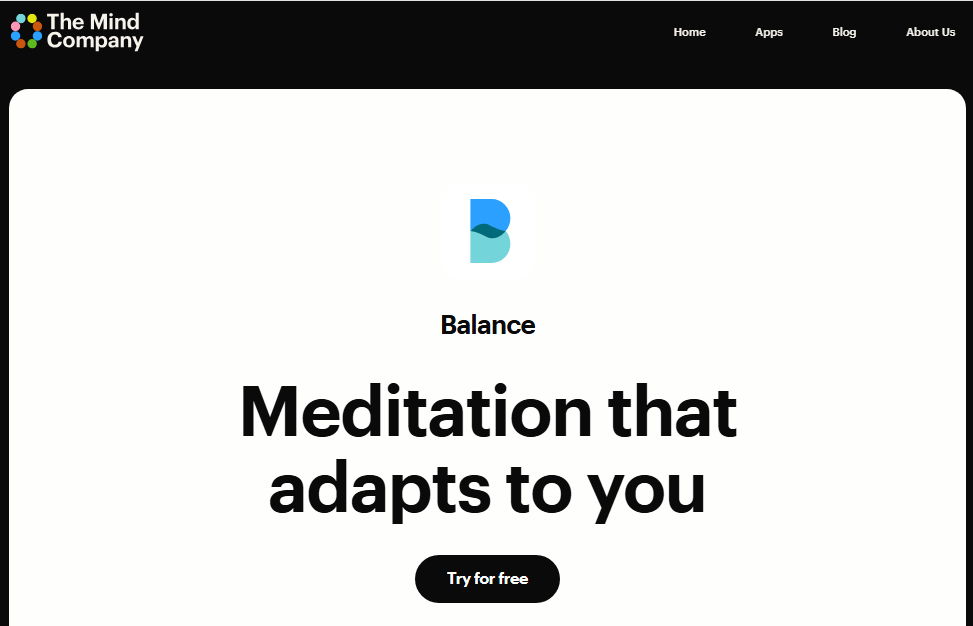
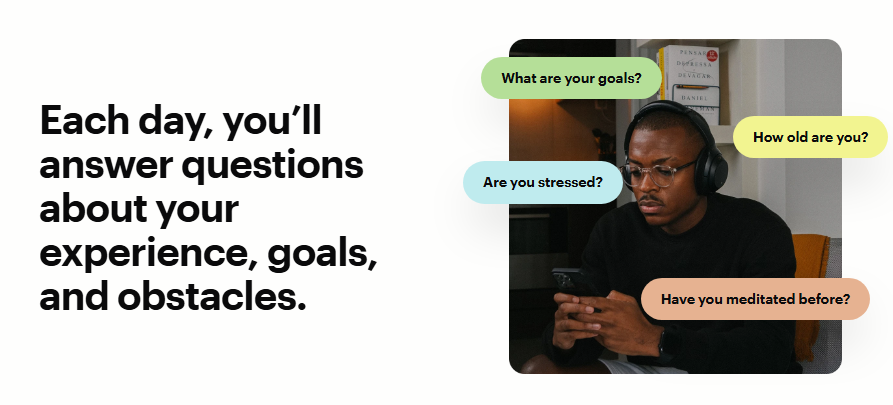
Balance is a personalized meditation app that takes a different approach to mindfulness than Calm’s content-library model. Rather than presenting users with hundreds of sessions to browse, Balance assembles custom meditations from thousands of audio files based on daily feedback about mood, experience level, and goals. The result is a meditation built for you each day.
Its key capabilities include:
Balance was named Google Play’s Best App of 2021 and holds a 4.9-star rating on iOS from over 119,000 reviews.
Balance stands out compared with Calm in several ways:
Source: Balance
Generous free trial.
Calm offers a 7-day free trial followed by a $79.99 annual subscription. Balance provides a one-year free trial with full access to all features. You get an entire year to explore the app, build a meditation habit, and experience adaptive personalization before paying anything. For beginners who aren’t sure meditation will stick, that’s a meaningful difference.
Streamlined, beginner-friendly experience.
Calm’s strength is its large content library, but for newcomers, that abundance can create barriers. Balance takes the opposite approach with its smaller library design that prioritizes depth over breadth. Structured 10-day Plans teach meditation skills in a progressive sequence, and the app handles content selection for you based on your daily check-in. Less time browsing, more time meditating.
We also evaluated Headspace and Insight Timer for personalization. While Headspace offers structured courses with a linear curriculum, and Insight Timer provides the largest free meditation library from thousands of teachers, Balance delivers the best AI-driven personalization for users who want a practice that evolves with daily feedback.
Balance uses a freemium subscription model:
All subscriptions auto-renew unless canceled at least 24 hours before the renewal date. Subscriptions are managed through the Apple App Store or Google Play Store.
Choose Balance if:
Tried multiple apps but still feel stuck?
Meditation can help. But it’s not a substitute for evidence-based therapy when you need deeper support.
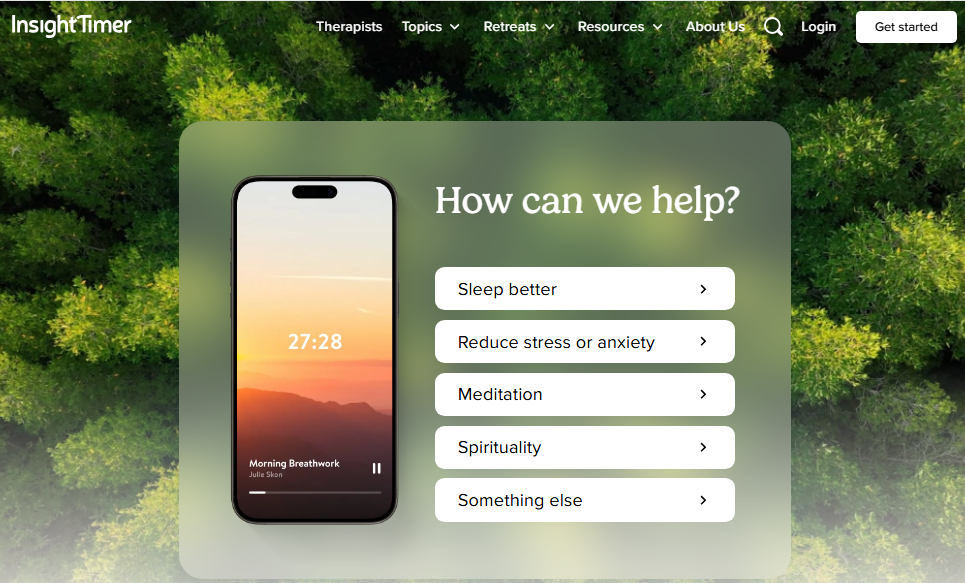
Insight Timer is the world’s largest meditation and mindfulness platform, with 32 million registered users and a different approach to content access than Calm. While Calm locks most content behind a $79.99 annual subscription, Insight Timer makes over 300,000 guided meditations, music tracks, and mindfulness resources available without any paywall.
Its key capabilities include:
Insight Timer stands out compared with Calm in several ways:
Free-first philosophy.
The most significant difference is content access. When the Plowman brothers acquired Insight Timer in 2014, one of their first decisions was to make everything free, reflecting their belief that every person on the planet should have access to free daily meditations.
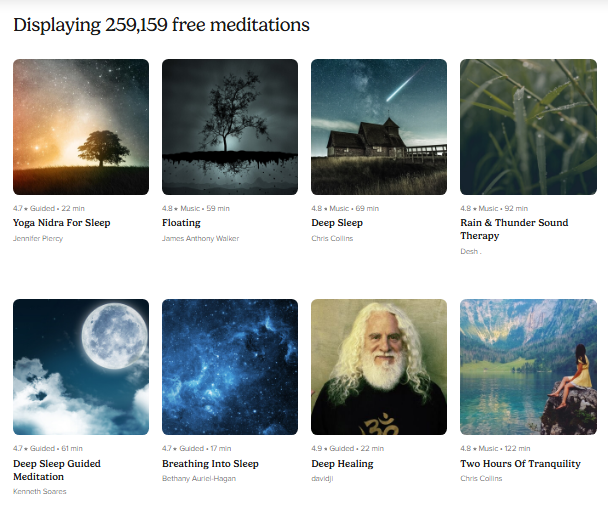
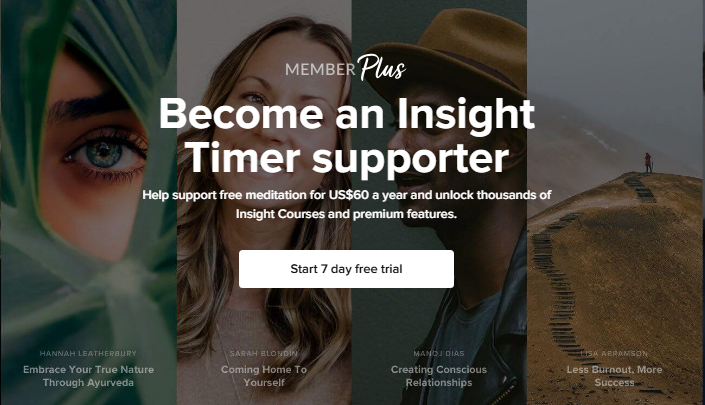
Today, the platform maintains over 300,000 free resources in 50 languages with 100+ new free meditations added daily. The optional MemberPlus subscription at $59.99/year adds premium courses and offline downloads, but the core library stays free.
Open platform diversity.
Rather than relying on a small team of in-house instructors and celebrity partnerships, Insight Timer operates like YouTube for meditation, letting over 20,000 teachers from around the world publish content.
The platform features content from experts such as Dr. Richard Schwartz (founder of Internal Family Systems), Tara Brach, and Kristin Neff, as well as meditation teachers, neuroscientists, and psychologists from Stanford, Harvard, and Oxford. Users seeking specific traditions like Vipassana, Zen, Dzogchen, or walking meditation will find dedicated content from specialists in each lineage.
Live community engagement.
Insight Timer offers live events every hour, letting users worldwide practice simultaneously with teachers in real time. The platform also supports Group Meditation sessions where friends or colleagues meditate together, each listening to their own chosen track while practicing in sync.
For many practitioners, the motivation and accountability that comes from practicing alongside others can be the difference between maintaining a habit and abandoning it after a few weeks. Calm’s experience, by contrast, is primarily solo and on-demand.
Source: Insight Timer
We also evaluated Medito and Smiling Mind as free alternatives. While Medito offers a donation-based model with no premium tier, and Smiling Mind provides good free content focused on educational institutions, Insight Timer offers the most complete free experience with the largest content library (300,000+ resources), the most active community features with live events, and the broadest international reach with content in 50 languages.
Insight Timer operates on a freemium model with extensive free access:
Source: Insight Timer
Choose Insight Timer if:
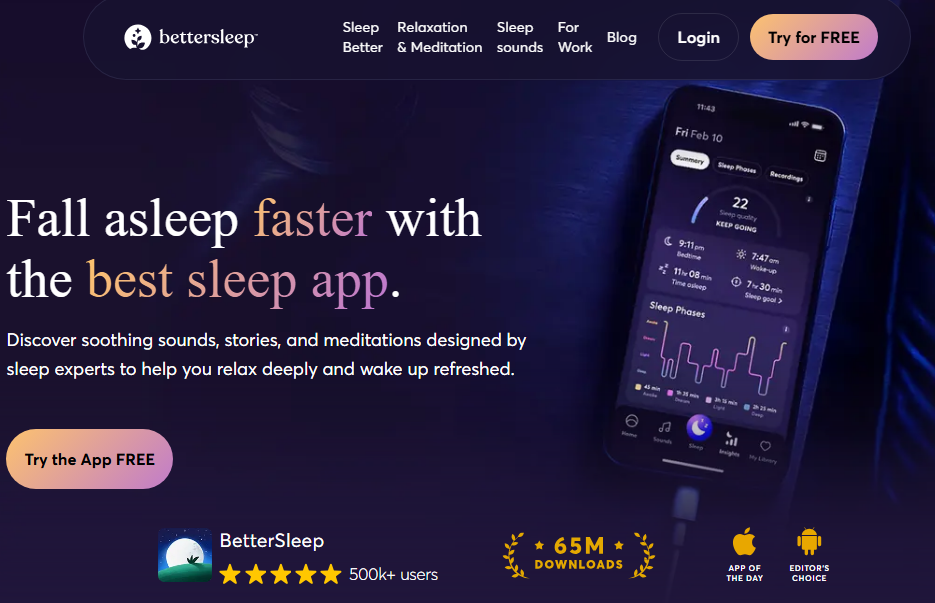
BetterSleep (formerly Relax Melodies) is a specialized sleep app built to solve sleep problems. Where Calm treats sleep as one feature among many, BetterSleep makes sleep its entire mission. Founded in 2009 after co-founder Philippe Lapierre developed acute tinnitus from a rock concert, the platform has served over 65 million users who have completed over 2 billion relaxation sessions.
Its key capabilities include:
BetterSleep stands out compared with Calm for users whose primary concern is sleep:
Sound customization.
While Calm offers pre-mixed soundscapes and music playlists, BetterSleep provides multi-track audio engineering capabilities. Users can layer rain with ocean waves with white noise with binaural beats, adjusting the volume of each element independently.
The library spans over 300 sleep sounds including color noises (white, pink, brown, green), six varieties of binaural beats, ASMR content, and Solfeggio frequencies. Calm asks “what do you want to listen to?”; BetterSleep asks “what do you want to create?”
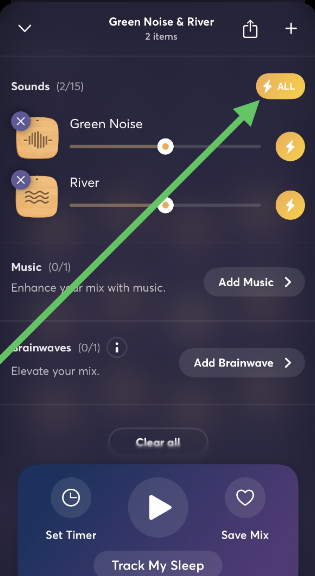
Source: BetterSleep
Integrated sleep tracking with pattern recognition.
BetterSleep includes built-in sleep tracking that creates a feedback loop. Users can experiment with different sound combinations and meditation types, then measure the impact on their sleep quality through tracking data. The platform extends this through chronotype assessment, helping users understand their natural circadian rhythms and optimize sleep schedules. Calm does not offer comparable sleep tracking.
Scientific audio technology beyond ambient sound.
BetterSleep incorporates binaural beats ranging from Delta 2.5Hz (dreamless sleep) to Beta 20Hz (focus), plus Solfeggio frequencies and ASMR content. The platform’s Scientific Advisory Board includes Dr. Russell Foster (Head of the Sleep and Circadian Neuroscience Institute at Oxford) and Dr. Aric Prather (Professor at UCSF), lending credibility that sets it apart from general wellness apps.
We also evaluated Pzizz and Sleepiest. While Pzizz excels at algorithmically generating unique soundscapes for every session and Sleepiest offers accessible bedtime stories, BetterSleep offers the most complete feature set for dedicated sleep improvement, combining sound customization, sleep tracking, and scientific audio technologies in a single platform.
BetterSleep offers multiple pricing options:
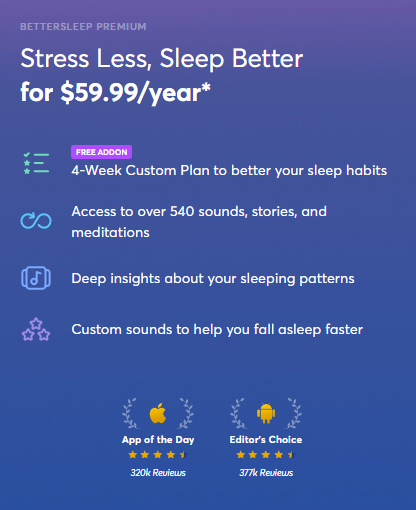
Source: BetterSleep
Choose BetterSleep if:
Meditation can support your mental health but therapy is where real change happens.
If you’re ready for structured, evidence-based care with measurable results, CarePaths helps you take the next step.
Waking Up is a meditation app created by Sam Harris, a neuroscientist with a Ph.D. from UCLA and over 30 years of meditation practice. Where Calm focuses on relaxation, sleep, and stress relief through soothing content, Waking Up teaches the philosophical and scientific foundations behind meditation itself. It’s built for users who want to understand “why” they’re practicing, not just “how.”
Its key capabilities include:
Waking Up stands out compared with Calm in several ways:
Theory-first approach.
While Calm focuses on guided meditations for stress relief and sleep, Waking Up spends considerable effort exploring the theory behind practice. The platform teaches users about the nature of consciousness, the illusion of self, and the philosophical foundations that make meditation transformative rather than merely relaxing.
Sam Harris’s dual expertise as a neuroscientist and longtime practitioner bridges ancient contemplative traditions and contemporary neuroscience in ways that Calm’s lifestyle-oriented approach does not attempt.
Secular, science-backed depth without religious dogma.
Waking Up provides meditation instruction without “New Age fluff.” The app has accumulated over 100,000 five-star reviews from users who appreciate its science-driven approach. It explores multiple meditation methods in detail (Vipassana, Zen, Dzogchen) while maintaining a precise, secular vocabulary. Where Calm might guide users to “notice your breath and let stress melt away,” Waking Up challenges users to investigate the nature of the observer doing the noticing.
Nondual awareness teachings.
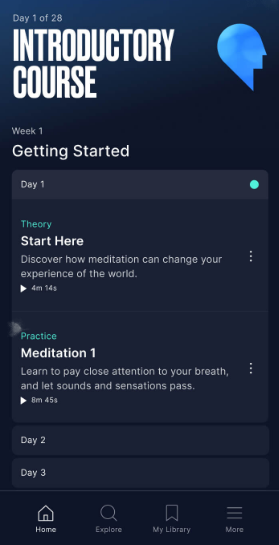
The most distinctive feature is Waking Up’s emphasis on nondual awareness, a concept largely absent from mainstream meditation apps. The Introductory Course goes beyond relaxation to teach foundational principles of self-inquiry, including practices where users “look for the observer” and explore states where the sense of separation between subject and object temporarily dissolves.
After completing the Introductory Course, users unlock additional meditations from different teachers across multiple traditions, providing breadth and depth rarely found in a single app.
Source: Waking Up
We also evaluated Happier Meditation (formerly Ten Percent Happier) and Plum Village. While Happier Meditation excels at practical, no-nonsense instruction, and Plum Village offers heart-centered practices rooted in Thich Nhat Hanh's teachings, Waking Up offers the most complete integration of meditation practice with intellectual exploration of consciousness and philosophy.
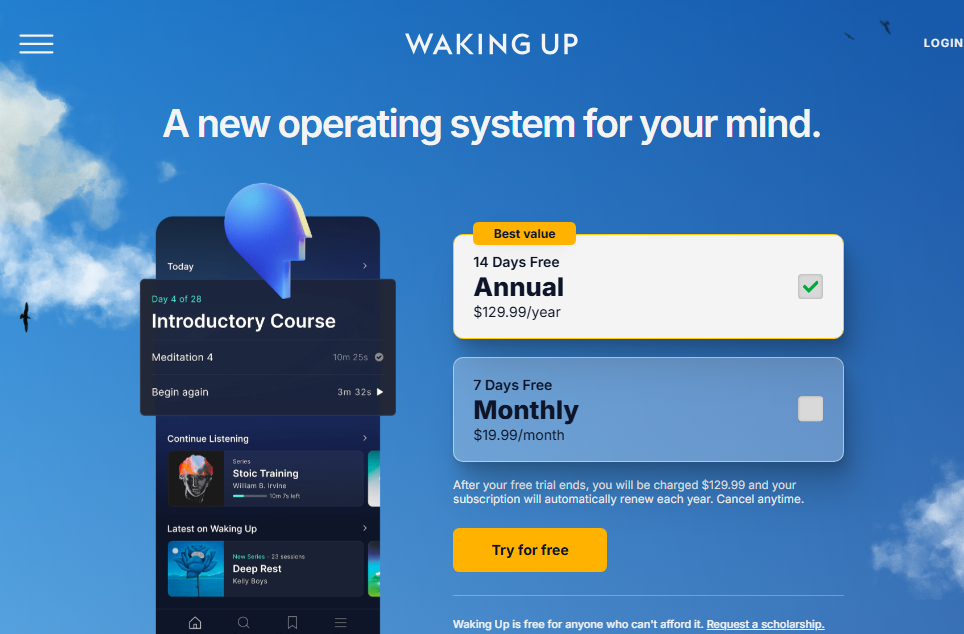
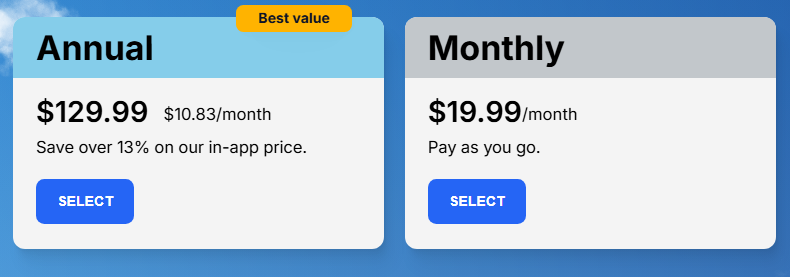
Waking Up operates on a subscription model:
The annual price is notably higher than Calm’s $79.99/year, reflecting the different value proposition: expert-led philosophical education and consciousness exploration versus lifestyle relaxation content.
Source: Waking Up
Choose Waking Up if:
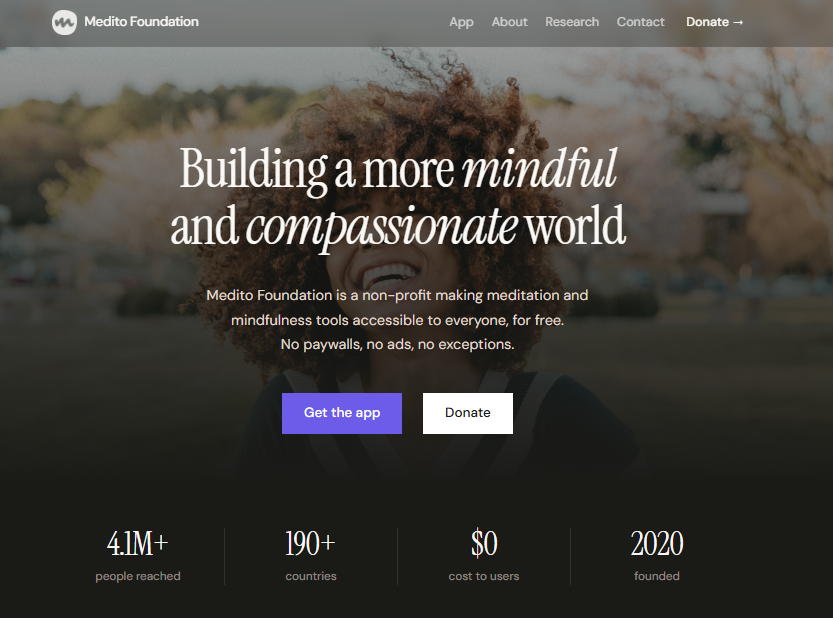
Medito is a registered nonprofit meditation app (Stichting Medito, Netherlands) built on the principle that mental wellbeing is a right, not a privilege. Unlike every other app on this list, Medito has no premium tier, no subscription, and no paywall. Every meditation, course, sleep story, and feature is free forever, funded entirely by voluntary donations.
Its key capabilities include:
Medito serves 4.1 million people across 190+ countries on an annual budget of just $120,000.
Medito stands out compared with Calm in several ways:
Unconditional free access.
Calm operates on a freemium model where the free version provides limited content, with most meditations, Sleep Stories, and Masterclasses locked behind a $79.99 annual subscription.
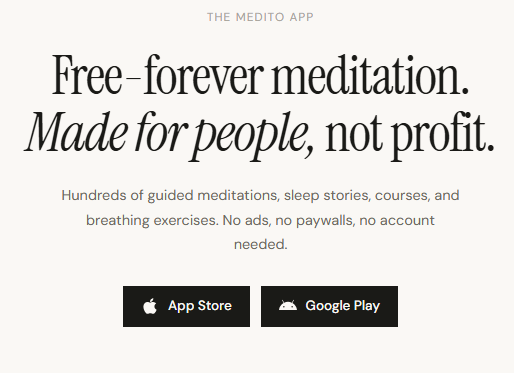
Medito provides every meditation, course, and feature free forever. This isn’t a temporary promotion or a limited free tier designed to convert users. It’s a permanent commitment rooted in the foundation’s nonprofit mission. The app also requires no account or email to begin, so users can start meditating within seconds without providing personal information.
Source: Medito
Open-source transparency and data privacy.
Medito is the only meditation app that is simultaneously 100% free, nonprofit, and open-source. The complete codebase is publicly available on GitHub, letting anyone audit exactly what the app does with user data. The foundation has no shareholders and no growth targets, eliminating the tension between user privacy and business objectives that commercial apps face.
Community-driven development.
Medito’s 200+ volunteers, professionals, and contributors from around the world create content because they believe in the mission, not because they’re optimizing for subscriber retention or engagement metrics. The foundation’s Scientific Advisory Board includes researchers like Dr. Ben Ainsworth from the University of Bath, and the foundation has partnered with 8+ universities on studies involving 3,000+ participants, contributing to the broader scientific understanding of meditation.
We also evaluated Insight Timer and Plum Village as free alternatives. While Insight Timer offers a larger free library with 300,000+ resources, it still operates as a for-profit company with a premium subscription tier. Plum Village provides good Buddhist-specific teachings. Medito uniquely combines being 100% free with nonprofit status and open-source transparency, a fundamentally different model for accessible mental wellness.
Medito is completely free:
Choose Medito if:
Every app on this list is a self-guided wellness tool, and they’re genuinely helpful for building mindfulness habits, improving sleep, and managing everyday stress. But if you’ve been searching for Calm alternatives because you’re working through anxiety, depression, trauma, or other persistent mental health challenges, it’s worth asking whether self-guided meditation alone is giving you what you need.
That’s where professional therapy comes in, and CarePaths is where to look for accredited providers who use measurement-based care to track real outcomes.
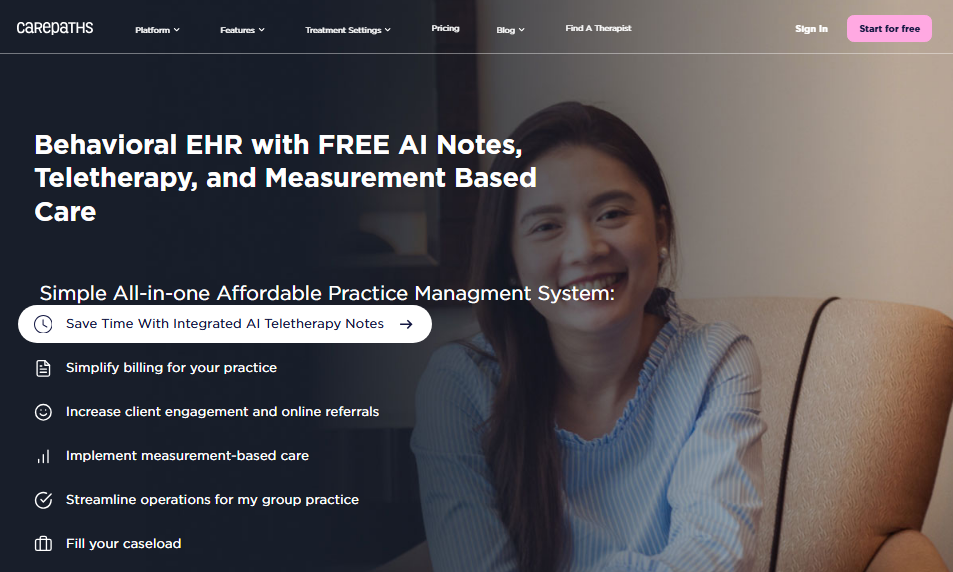
CarePaths is a platform built for behavioral health professionals (licensed therapists, psychologists, and psychiatrists) that enables them to deliver measurement-based care (MBC).
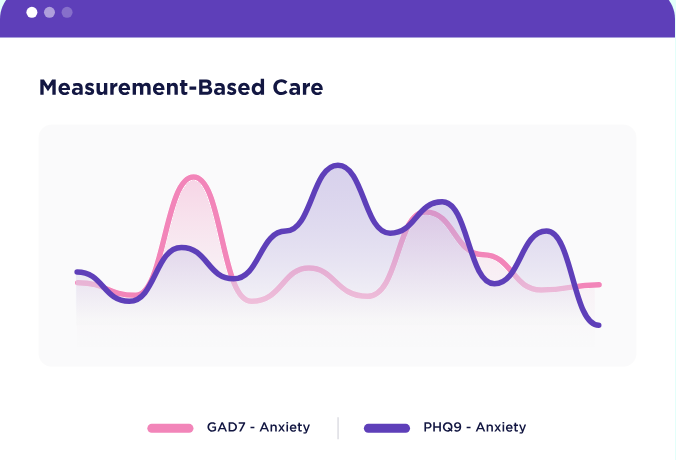
Developed in collaboration with Dr. Bruce Wampold, one of the most cited psychotherapy researchers in the world, MBC involves regularly assessing patient outcomes using validated tools and using that data to inform clinical decisions. Research consistently shows that MBC improves therapy outcomes because it catches stalled progress early and prompts course corrections.
A 10-minute Daily Calm session can complement therapy well, but clinical anxiety, depression, PTSD, and trauma often require a licensed clinician who can diagnose conditions, develop a treatment plan, and adjust that plan based on measured progress over weeks and months. When your therapist uses a CarePaths-powered practice, they’re not guessing whether treatment is working. They have data.
Source: CarePaths
The professionals accessible through CarePaths are licensed therapists, clinical psychologists, and board-certified psychiatrists who use approaches like Cognitive Behavioral Therapy (CBT), Dialectical Behavior Therapy (DBT), and EMDR, modalities clinically validated for specific conditions.
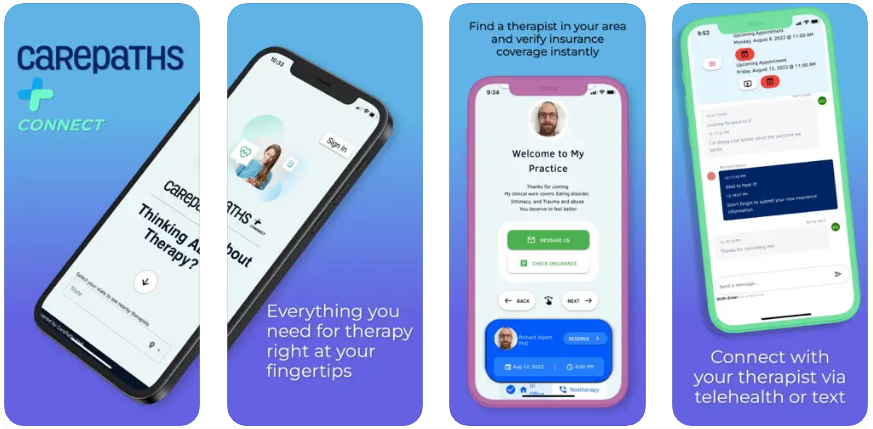
Through the CarePaths Connect patient portal, patients can schedule appointments, complete clinical assessments between sessions, participate in telehealth video sessions, and communicate securely with their provider, all through a HIPAA-compliant platform.
Source: App Store
CarePaths was founded in 2000 by Dr. Geoff Gray and Dr. Maureen Hart, both clinical psychologists who understood the daily challenges of running a behavioral health practice. This clinical foundation means CarePaths isn’t a tech company that entered healthcare. It’s a healthcare platform built by people who deliver care.
CarePaths offers a free Measurement-Based Care plan for providers serving up to 30 clients, making it accessible for practices of all sizes. For patients, the cost of therapy depends on their provider’s rates and insurance coverage. Many therapists who use CarePaths accept insurance, and the platform’s billing tools help practices process claims efficiently.
By Bruce Wampold PhD
Complete Practice Management System
Getting Started?
Consider looking into CarePaths-powered providers if:
Calm is a well-designed, content-rich wellness app that works well for millions of users. But as your needs become more specific, specialized tools may deliver better results in the areas that matter most to you. Based on our research, here are the best alternatives:
You don’t have to choose between Calm and these alternatives. Many users combine Calm’s content library with more specialized tools. Someone might use BetterSleep for sleep and Waking Up for daytime meditation. Someone else might use Insight Timer’s free library for daily practice and Headspace when they need clinical support.
⭐ And if you’ve been exploring meditation apps because you’re working through anxiety, depression, or other mental health challenges, consider whether self-guided tools alone are enough, or whether working with a licensed therapist could accelerate your progress. Meditation complements professional therapy well, and platforms like CarePaths make it easier to find providers who use measurement-based care to track real outcomes.
Ready to explore professional therapy with providers who measure real outcomes? Learn more about CarePaths and discover how measurement-based care can make a difference in your mental health journey.