Headspace has become one of the most recognizable names in digital wellness, offering guided meditations, sleep tools, and mindfulness exercises to over 70 million members worldwide. For anyone looking to reduce stress, sleep better, or build a daily mindfulness habit, it provides a polished and approachable starting point.
To write this Headspace review, I’ve spent time exploring the platform. I believe it’s the ideal choice if:
However, Headspace is not designed for situations where:
For these needs, self-guided meditation is only one piece of the puzzle. Professional therapy, delivered through a platform built for clinical accountability, represents a fundamentally different approach to mental health.
CarePaths is a behavioral health EHR designed by clinical psychologists that enables licensed therapists to deliver measurement-based care: therapy where progress is tracked systematically through validated assessments, and treatment is adjusted based on real data.
Because of that, I’ve included a detailed look at CarePaths later in this Headspace review, as an option for anyone whose mental health needs extend beyond what a self-care app can provide. If you’re a clinician looking to deliver better outcomes, or a patient seeking evidence-based therapy, you can start with CarePaths’ free trial here.
Table of contents:
Headspace was founded in May 2010 by Andy Puddicombe, a former Buddhist monk, and Richard Pierson, who has a background in marketing and brand development.
The pair initially hosted live meditation events in London before launching the Headspace app in 2012. Their goal was to make meditation more accessible to people who had never considered the practice.
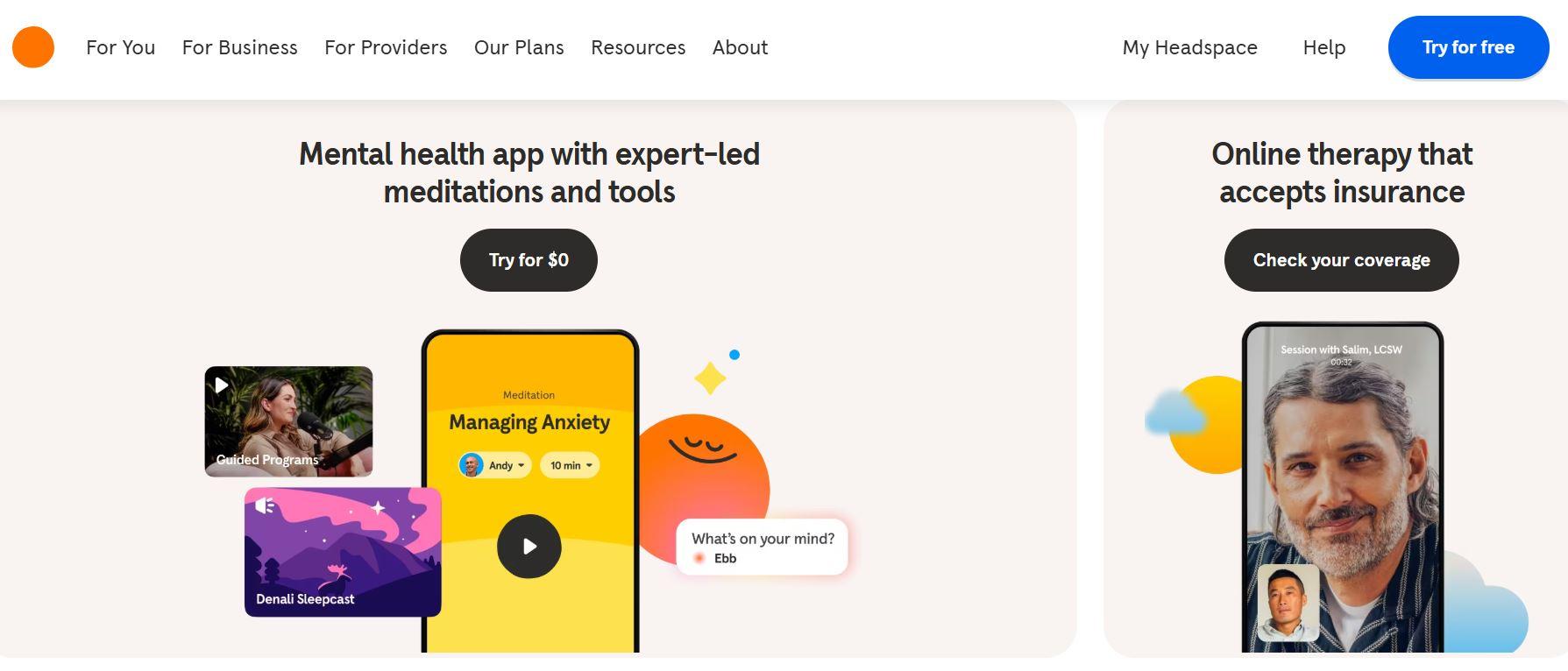
Today, Headspace serves over 70 million members across 190 countries.
The app has grown from a simple meditation tool into a broader mental wellness platform, offering guided meditations, sleep content, mindful fitness exercises, focus music, and (through its merger with Ginger in 2021) clinical services like coaching, therapy, and psychiatry under Headspace Care.
The platform is widely recognized for its beginner-friendly approach. Puddicombe’s calm narration, the app’s friendly illustrations, and its structured courses have helped make Headspace a popular choice for people looking to manage everyday stress, improve sleep, or build a consistent mindfulness habit without feeling overwhelmed.
| Pros | Cons |
|---|---|
| ✅ Beginner-friendly with structured courses and clear guidance | ❌ Subscription cost ($12.99/month or $69.99/year) can add up |
| ✅ Over 1,000 guided meditations covering stress, sleep, focus, and more | ❌ Limited customization options for experienced meditators |
| ✅ Science-backed content with published research on effectiveness | ❌ Not all content is available offline |
| ✅ High-quality production and soothing narration | ❌ Basic self-assessment tools, but no comprehensive clinical outcome tracking |
| ✅ Comprehensive sleep tools, including Sleepcasts and soundscapes | ❌ Therapy and psychiatry services are separate from the core subscription |
| ✅ Mind-body fitness with Olympic athlete instructors | ❌ No tools for independent licensed clinicians or external professional treatment settings |
| ✅ Personalized daily content through the "Today" tab | ❌ Cannot replace professional mental health treatment |
The “Meditate” tab is the core of Headspace. It houses over 1,000 guided meditations organized into themed courses of varying lengths and standalone “Singles” for specific moments.
Beginners start with “The Basics,” a foundational course that introduces breathing techniques, body scanning, and focused attention in short, manageable sessions.
Session lengths range from 3 to 20 minutes, with some advanced options extending up to 120 minutes. Users can choose between male and female narrators for many sessions. Topics span managing anxiety, building self-esteem, navigating grief, and cultivating gratitude, among others.
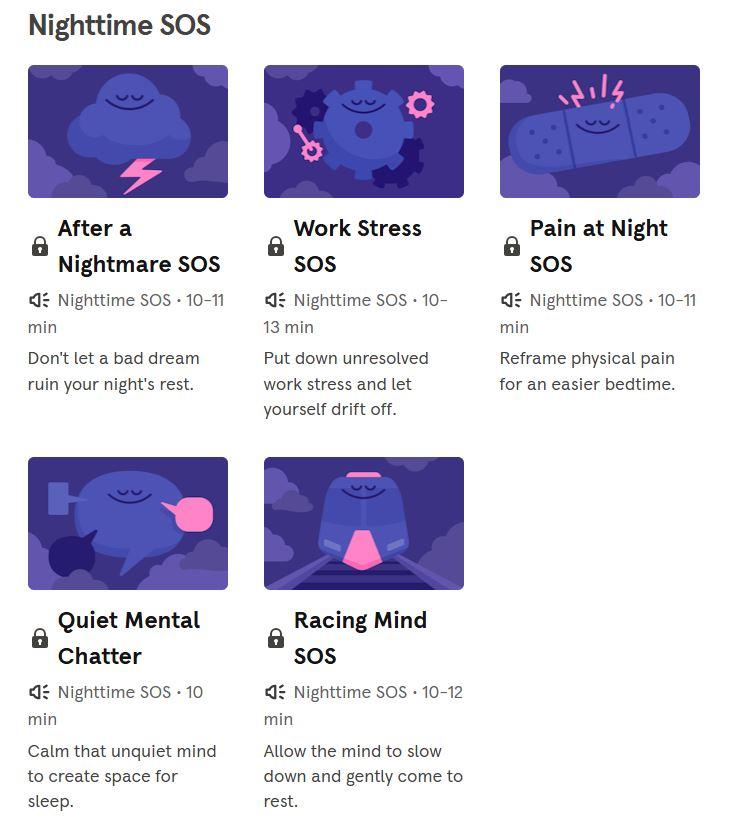
For moments of acute stress, “SOS Meditations” provide 3-minute exercises for situations like panic, anger, or feeling overwhelmed. There are also “Nighttime SOS” sessions for users who wake up with racing thoughts.
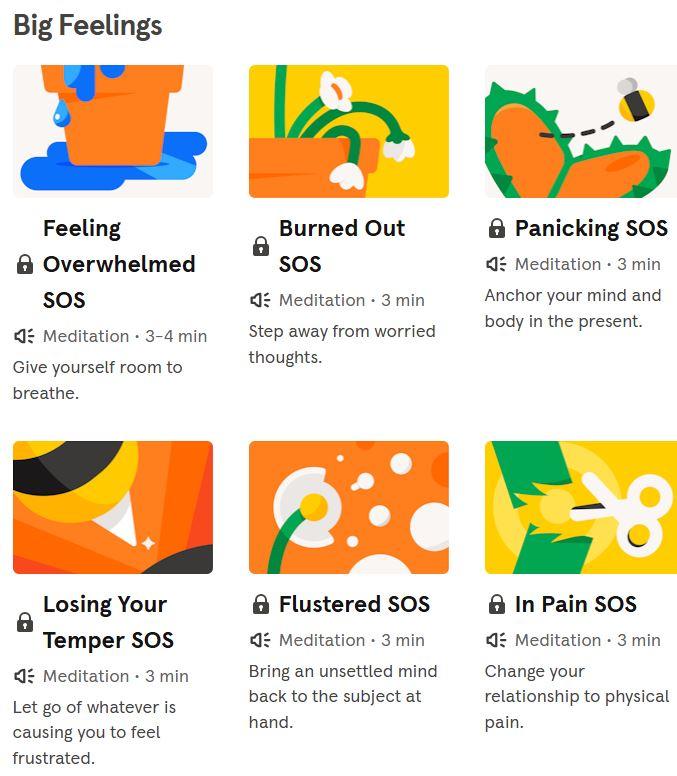
Source: Headspace
Progress tracking logs total minutes meditated and consecutive day streaks. The app also includes monthly check-ins through the “My Progress” feature, which administers validated scales like the Perceived Stress Scale and GAD-7 to help users monitor changes in stress and anxiety over time.
Headspace’s “Sleep” section functions as its own mini-app, offering several distinct content types.
“Sleepcasts” are 45 to 55-minute audio tours of fictional, tranquil environments (think “Rainday Antiques” or “Desert Campfire”) narrated in a slow, soothing voice.
They use a non-linear structure, meaning there’s no plot to follow, which prevents the mind from tracking story progression and becoming more alert. The content is remixed nightly, so each listen feels slightly different.
“Wind Downs” are guided exercises (typically 3 to 20 minutes, though some extended sessions run longer) that use breathing techniques and visualizations to transition from wakefulness to rest.
“Sleep Music” provides ambient tracks that can play for up to eight hours, and “Soundscapes” offers 3D recordings of environments like ocean waves, rainfall, and forest sounds.
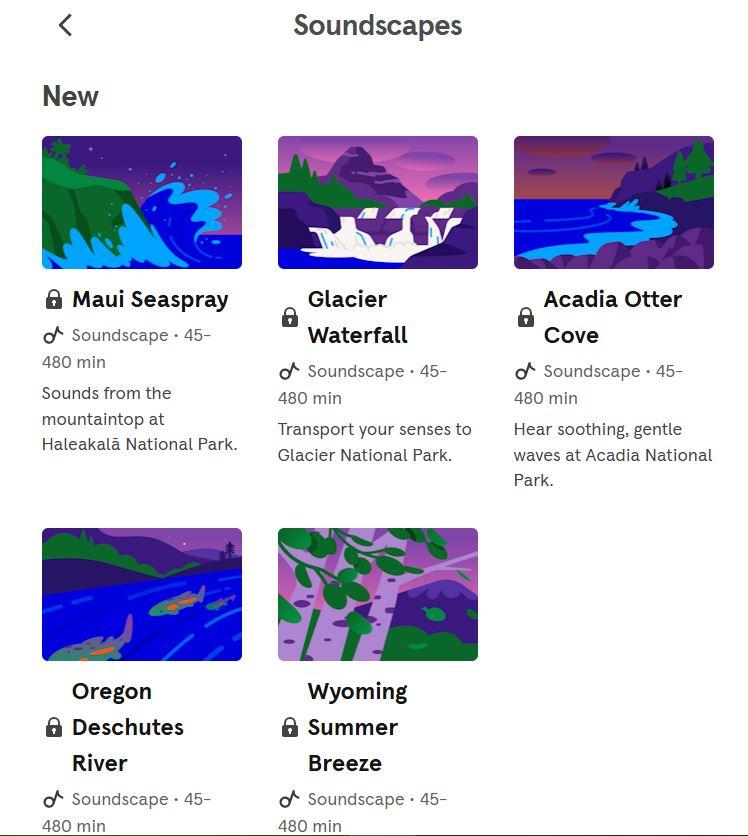
The “Nighttime SOS” section specifically targets midnight awakenings with guided exercises for racing thoughts, work stress, and general worry.
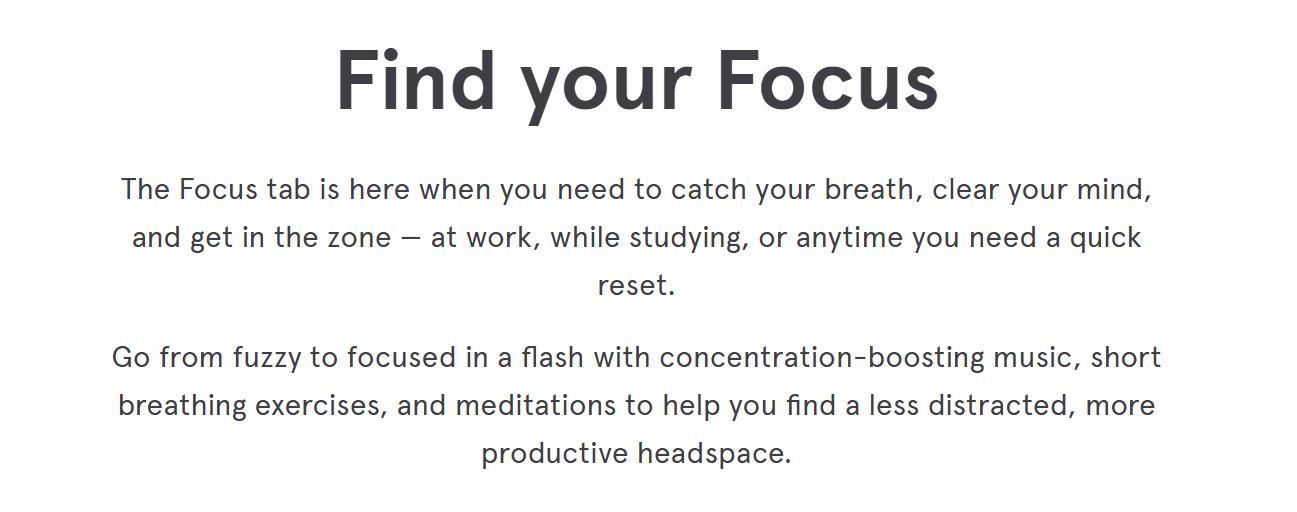
The “Focus” tab provides audio content to support deep work and study. Focus Music spans genres like lo-fi beats, ambient piano, cinematic soundscapes, and jazz.
Source: Headspace
Headspace has partnered with artists including John Legend (their first Chief Music Officer), Hans Zimmer, and Arcade Fire for exclusive compositions and curated playlists.

“Soundscapes for Work” offers 3D audio recordings from locations around the world, from glacier waterfalls to lakeside campfires, designed to mask distracting background noise.
Guided meditations for focus address specific scenarios like preparing for a presentation, studying for an exam, or resetting during a long workday. A 30-day “Focus pack” helps users build concentration skills over time.
The “Move” feature integrates mindfulness with physical exercise. Workouts are low-to-medium impact and last 10 to 30 minutes, led by instructors including British Olympic diver Leon Taylor and American Olympic volleyball player Kim Glass. Sessions emphasize mindful anchors: intention, breathing, timing, form, and recovery.
Content includes guided workouts, yoga, dance breaks, and mindful cardio (audio-guided walks, jogs, or runs). “Rest Day Meditations,” led by Andy Puddicombe, support mental and physical recovery between active sessions.
The emphasis is on present-moment awareness during movement rather than performance metrics, making the workouts accessible to people at any fitness level.
Through its 2021 merger with Ginger, Headspace expanded into clinical mental health services.
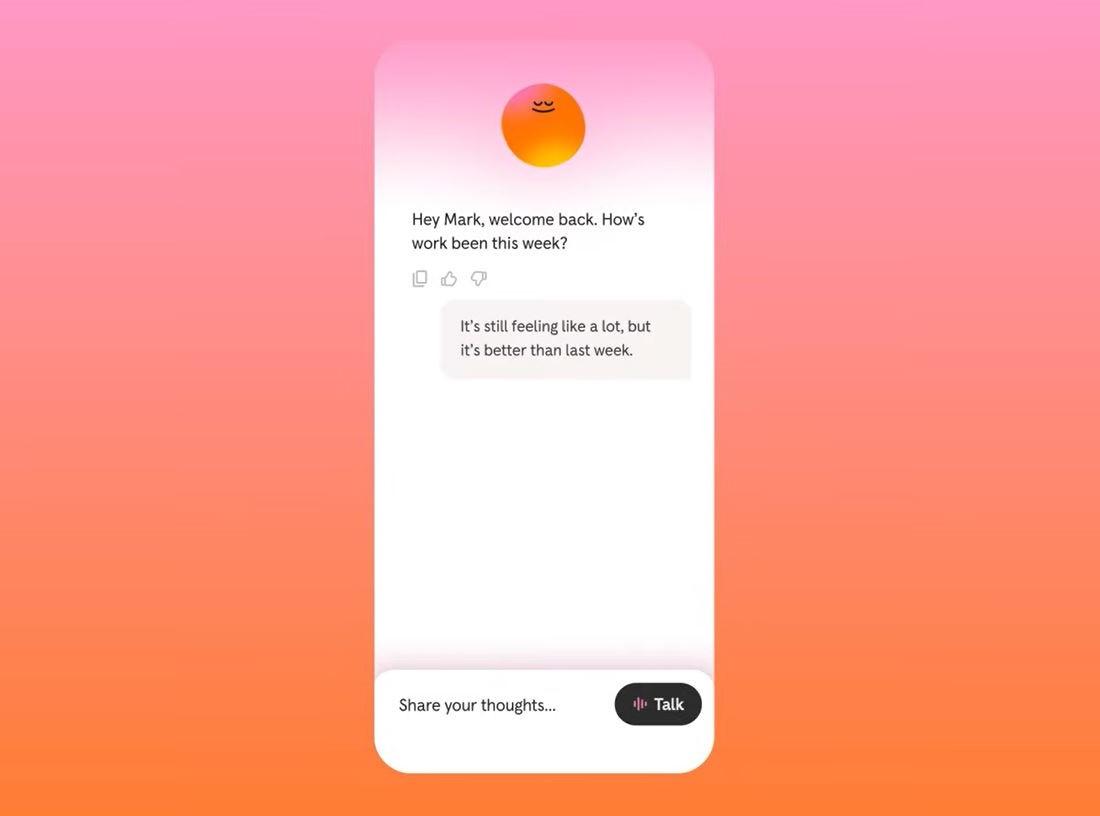
Headspace Care offers text-based coaching (available 24/7, with connections typically within minutes), video therapy with licensed therapists, and psychiatry with board-certified psychiatrists who can prescribe non-controlled medications.
The service uses a stratified care model: users start with an AI companion called “Ebb” for personalized recommendations, connect with a coach for everyday challenges, and can be escalated to therapy or psychiatry for more acute needs.
Source: Headspace
Headspace Care has historically been primarily available as an employer-sponsored benefit (brb), though Headspace has begun expanding access to individual U.S. subscribers who can now access therapy services through self-pay or insurance options.
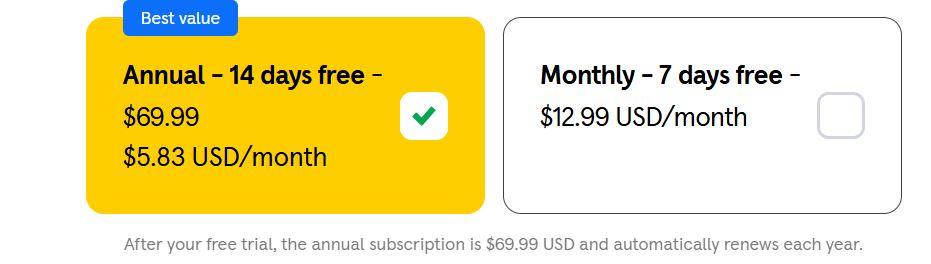
However, individual users of the standard Headspace meditation subscription ($12.99/month or $69.99/year) receive the meditation, sleep, focus, and movement content, while clinical services are billed separately.
Headspace does what it sets out to do: make mindfulness accessible, engaging, and habit-forming. But its design choices reveal clear boundaries around what it can and cannot address.
Basic Self-Tracking Without Comprehensive Clinical Accountability:
Headspace does offer some self-assessment tools through its “My Progress” feature, which periodically administers validated scales like the Perceived Stress Scale and GAD-7 to help users monitor stress and anxiety. This is a meaningful addition.
However, these self-reported check-ins are a long way from the comprehensive measurement-based care used in professional therapy, where a licensed clinician reviews validated assessments across multiple domains, adjusts treatment plans based on trends, and maintains accountability for outcomes over time.
For people dealing with clinical-level mental health challenges, the gap between self-tracking and clinician-managed outcome measurement remains significant.
No Replacement for Professional Treatment: Headspace itself acknowledges this.
Meditation and mindfulness are wellness practices, not clinical interventions. They can complement therapy, but for conditions like major depressive disorder, generalized anxiety, PTSD, or substance use issues, evidence-based professional treatment with a licensed clinician remains the standard of care.
Someone searching for mental health solutions may start with Headspace and benefit from it, but should understand that it operates in a different category than therapy.
Therapy Services Not Bundled With the Core Subscription: While Headspace has expanded access to therapy and psychiatry for individual U.S. subscribers beyond its employer-sponsored plans, these clinical services are not included in the standard meditation subscription.
An individual paying $12.99/month or $69.99/year gets the self-care library, but therapy sessions are a separate purchase. This means the most comprehensive mental health support on the platform requires additional cost or employer coverage.
No Tools for Independent Clinicians: Headspace is built for consumers.
While Headspace Care employs licensed therapists and psychiatrists internally, the platform does not offer tools for independent licensed clinicians to document sessions, track treatment progress, submit insurance claims, or coordinate care with other providers.
The platform doesn’t serve the professional side of mental healthcare delivery for practitioners running their own practices.
These are not failures. They reflect Headspace’s deliberate focus on consumer wellness. But they highlight a fundamental truth: for people whose mental health needs go beyond what daily meditation and basic self-tracking can address, a different kind of platform is required, one built from the ground up for professional, measurable, and accountable therapeutic care.
CarePaths addresses the clinical side of mental healthcare in ways that consumer apps like Headspace were not designed to.
Source: CarePaths
Founded in 2000 by clinical psychologists Dr. Geoff Gray and Dr. Maureen Hart, CarePaths is an ONC-certified, HIPAA-compliant Electronic Health Record (EHR) and practice management platform built specifically for behavioral health professionals.
Where Headspace helps individuals practice mindfulness on their own, CarePaths enables licensed clinicians to deliver, document, and measure professional therapy.
The defining feature of CarePaths is its integrated Measurement-Based Care (MBC) system, developed under the supervision of Dr. Bruce Wampold, a leading psychotherapy researcher.
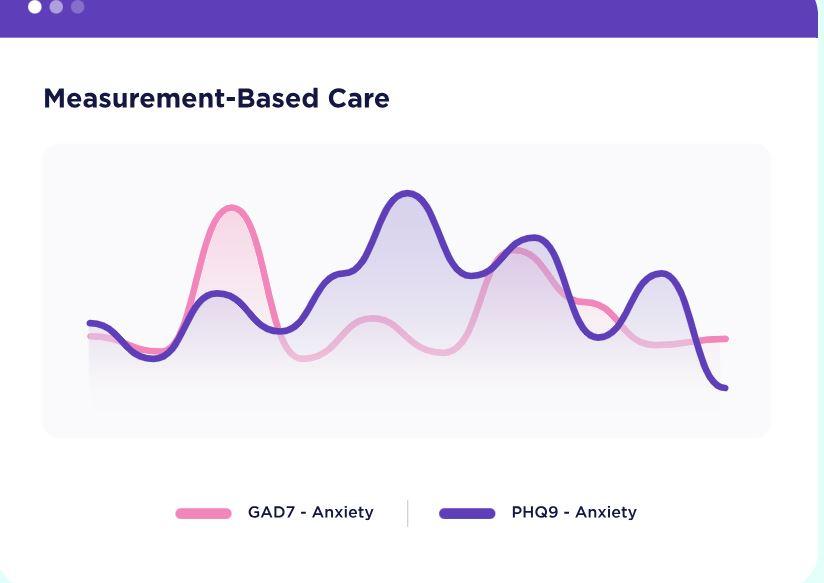
MBC automates the process of sending standardized assessments to patients at regular intervals, typically weekly, covering domains like psychological distress, well-being, loneliness, and the strength of the therapeutic relationship.
Assessments are broken into small, manageable sets delivered on different days (for example, depression and anxiety measures on Monday, well-being and loneliness on Wednesday, therapeutic alliance on Friday).
Patients complete them through the CarePaths Connect mobile app or patient portal in just a couple of minutes. Results appear as visual progress graphs at the top of the patient’s chart in the EHR, giving therapists an immediate view of how treatment is working.
This approach helps shift therapy toward a more data-informed process. If a patient’s depression scores plateau after several weeks, the clinician can see it in the data and adjust their approach. If scores are improving steadily, both therapist and patient have objective confirmation that treatment is on track.
CarePaths offers MBC for free for up to 30 clients per therapist, making it accessible even for solo practitioners.
CarePaths includes HIPAA-compliant telehealth for individual and group therapy sessions at no additional cost. Therapists launch sessions directly from the patient’s chart, and patients join through the patient portal or mobile app. The system supports both in-person and virtual practices.

Source: CarePaths
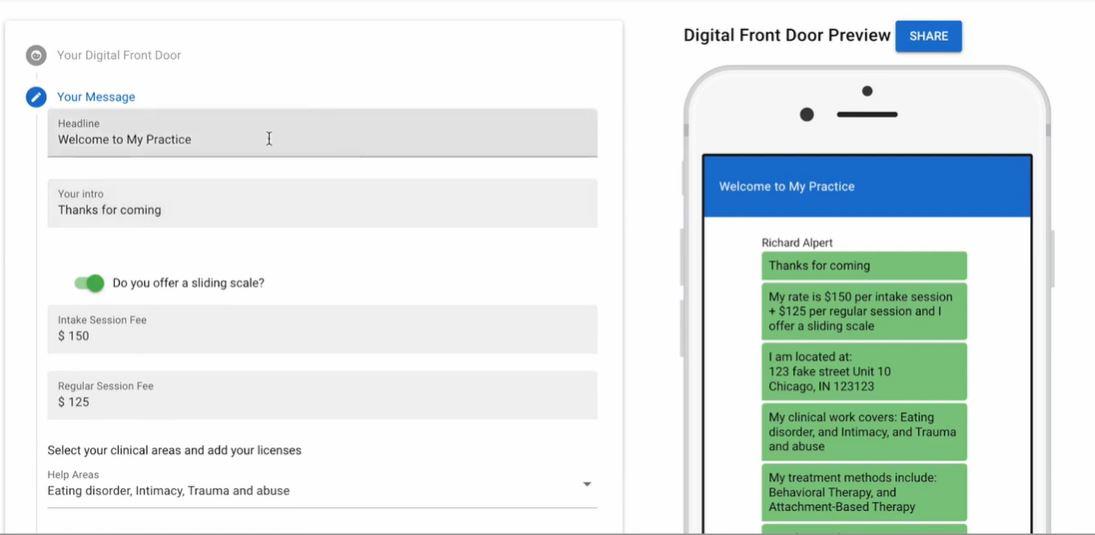
The CarePaths Connect app serves as a “Digital Front Door” for practices. New patients can find therapists, verify their insurance, view open appointment slots, and schedule their first session directly through the app.
Existing patients use the portal and app to manage intake paperwork, pay bills, communicate securely with their therapist, and complete MBC assessments.
Source: YouTube
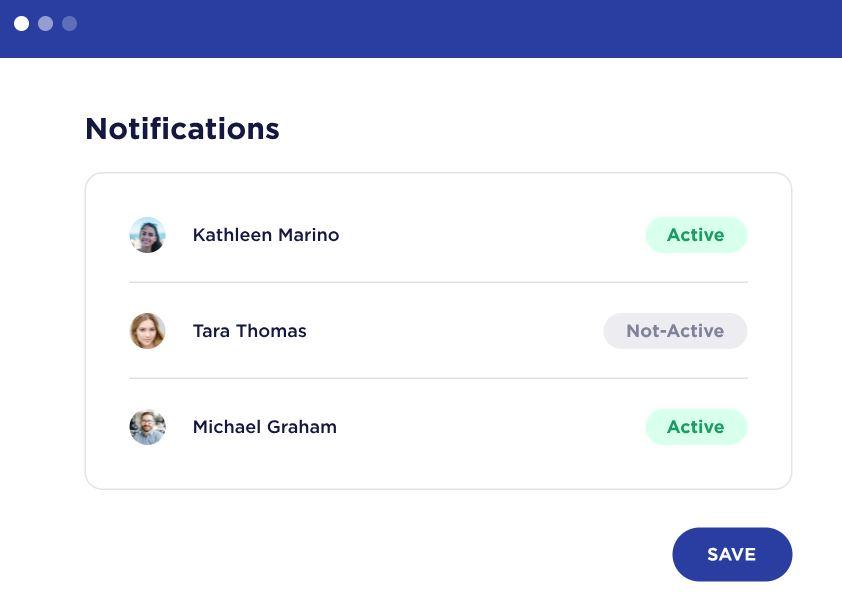
Automated appointment reminders via SMS, email, and phone help reduce no-shows.
Source: CarePaths
Secure messaging between sessions gives patients a way to share updates or ask questions without waiting for their next appointment, strengthening the therapeutic relationship between visits.
CarePaths integrates clinical documentation, scheduling, billing, and claims processing into one platform.
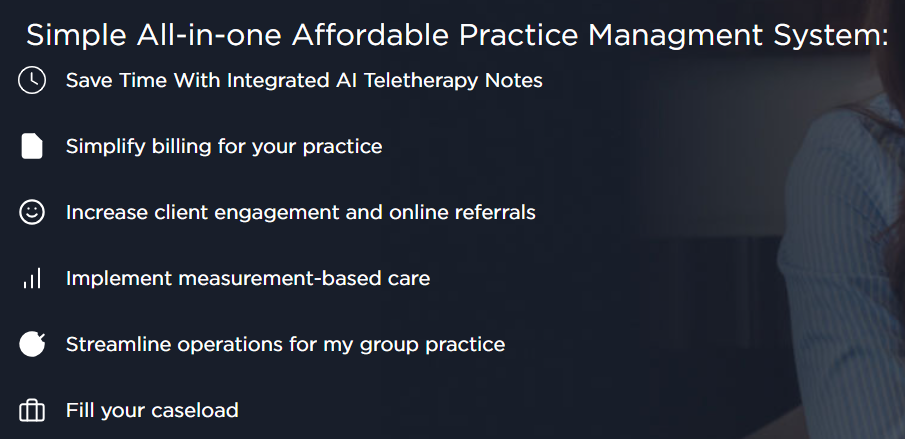
Progress notes can be pre-populated from previous sessions, and completing a note with a CPT code automatically posts the charge and generates an electronic claim. Claims can be submitted to all payers, including Medicare and Medicaid, with free eligibility verification.
The platform includes an extensive library of customizable clinical templates, support for group and family session documentation, supervisor review workflows for training clinics, and AI-generated session summaries for teletherapy sessions (developed in-house, HIPAA-compliant, and included for free).
For psychiatrists, CarePaths offers e-prescribing for both controlled and non-controlled substances through its partnership with DrFirst, with decision support alerts for drug interactions and medication history access.
CarePaths prices its full EHR at $49 per month per licensed therapist, which includes telehealth, electronic claims, eligibility verification, appointment reminders, the patient portal, AI session notes, and automated MBC. A $10/month plan is available for clinicians with 15 or fewer sessions per month.
By Bruce Wampold PhD
Complete Practice Management System
Getting Started?
The Psychiatry EHR, which adds e-prescribing, is $98/month. Group practices, non-profits, and academic institutions receive discounted rates.
All EHR Features Plus E-Prescribing Software
A 30-day free trial requires no credit card, and the free MBC tier (up to 30 clients) allows clinicians to start tracking outcomes immediately.
| Aspect | Headspace | CarePaths |
|---|---|---|
| Primary purpose | Self-guided mindfulness and meditation | Professional behavioral health EHR with measurement-based care |
| Target users | General consumers seeking wellness tools | Licensed mental health clinicians and their patients |
| Approach to mental health | Self-care through meditation, sleep, and focus exercises | Evidence-based therapy with systematic outcome tracking |
| Clinical accountability | Basic self-assessment tools (PSS, GAD-7) for personal tracking | Automated validated assessments across multiple domains with clinician-facing progress graphs |
| Therapy/counseling | Headspace Care offers therapy as a separate service (expanding to individual U.S. subscribers) | Platform for licensed therapists to deliver and document treatment |
| Telehealth | Not included in the core meditation subscription | HIPAA-compliant video sessions included at no extra cost |
| Billing and insurance | Consumer subscription ($12.99/month or $69.99/year) | Integrated claims processing to all payers, including Medicare/Medicaid |
| Patient engagement | Daily content, streaks, monthly check-ins | Patient portal, mobile app, secure messaging, self-scheduling |
| Science backing | Published research on stress reduction from meditation | MBC protocol developed with Dr. Bruce Wampold; evidence-based outcome tracking |
| Pricing | $12.99/month or $69.99/year for individuals | $49/month per clinician (full EHR); free MBC for up to 30 clients |
Headspace and CarePaths serve fundamentally different roles in the mental health landscape, and understanding where each fits can help you make the right choice for your situation.
👉Choose Headspace if you're looking for a daily wellness companion that makes meditation, mindfulness, and healthy sleep habits accessible and enjoyable. It's built for people who want to manage everyday stress, sharpen their focus, and build a consistent self-care practice through high-quality guided audio content.
The structured courses, soothing narration, and breadth of content (from 3-minute SOS meditations to 8-hour sleep soundscapes) make it one of the most approachable wellness apps available.
Get started with Headspace here.
👉Choose CarePaths if you're a behavioral health clinician who wants to deliver measurable, evidence-based therapy, or a patient seeking professional treatment where progress is tracked objectively over time. CarePaths helps shift therapy toward a data-informed process, giving both therapists and patients visibility into whether treatment is working.
For practices that want an affordable, all-in-one system covering documentation, billing, telehealth, and automated outcome monitoring, it provides the clinical infrastructure that consumer wellness apps were never designed to offer.
Get started with CarePaths here.
The distinction is straightforward: **Headspace** helps you build healthier daily habits on your own. **CarePaths** powers the professional therapeutic relationships where licensed clinicians help you work through deeper challenges with accountability and measurable progress. For many people, both have a place in their mental health journey.