Calm has become one of the most recognized names in digital mental wellness, offering guided meditations, Sleep Stories, breathing exercises, and music designed to help users manage stress, sleep better, and build mindfulness habits. With over 180 million downloads and a strong reputation as a top app for sleep and relaxation, it has earned a loyal following among people looking for accessible, on-demand tools to support their well-being.
To write this Calm app review, I’ve spent time exploring the platform. I believe it’s the ideal choice if:
However, Calm might not be sufficient if:
For those who find that self-help tools aren’t enough on their own, professional therapy offers the structured, evidence-based support that apps simply can’t provide.
And this is where CarePaths becomes relevant: a behavioral health platform that helps therapists deliver Measurement-Based Care, systematically tracking client outcomes to make therapy more effective and transparent.
Because of that, I’ve included a brief overview of CarePaths at the end of this Calm review, for readers who may be considering professional support alongside (or instead of) a wellness app. If you’re a therapist interested in outcome-driven practice management, you can start a free trial of CarePaths here.
Table of contents:
Calm is a mobile and web-based mental wellness app founded in 2012 by Michael Acton Smith and Alex Tew. The co-founders, previously known for creating The Million Dollar Homepage, built Calm to help people cope with the stresses of modern life through accessible mindfulness and relaxation tools.
What started as a meditation app has evolved into a comprehensive wellness platform. Today, Calm positions itself as the #1 app for sleep, meditation, and relaxation, offering guided meditations, Sleep Stories narrated by celebrities, breathing exercises, focus music, soundscapes, gentle movement sessions, and educational Masterclasses. The app operates on a freemium model, providing a selection of free content alongside a premium subscription that unlocks the full library.
Calm is available on iOS, Android, and the web, with integrations for Apple Watch, Google WearOS, and smart speakers. The platform has accumulated over 150 million downloads and over 3 million five-star reviews. Its ideal users include individuals looking to reduce stress, improve sleep, build a meditation habit, or introduce mindfulness to their children through the dedicated Calm Kids content.
| Pros | Cons |
|---|---|
| ✅ Extensive content library covering meditation, sleep, music, and movement | ❌ Most content locked behind a paid subscription |
| ✅ High production quality with celebrity-narrated Sleep Stories | ❌ Annual subscription costs $69.99 - $79.99 per year (monthly option available at $16.99) |
| ✅ Intuitive, calming interface that's easy to navigate | ❌ Limited free content (a few sessions, not a full library) |
| ✅ Daily Calm provides fresh 10-minute guided meditation every day | ❌ No social or community features for motivation |
| ✅ Content for all ages, including dedicated kids' section | ❌ No professional clinical guidance or personalized feedback in the core app |
| ✅ Offline downloads for use without internet | ❌ Can feel overwhelming given the sheer volume of content |
| ✅ Breathing exercises and movement sessions for in-the-moment relief | ❌ Mixed reviews on customer support responsiveness |
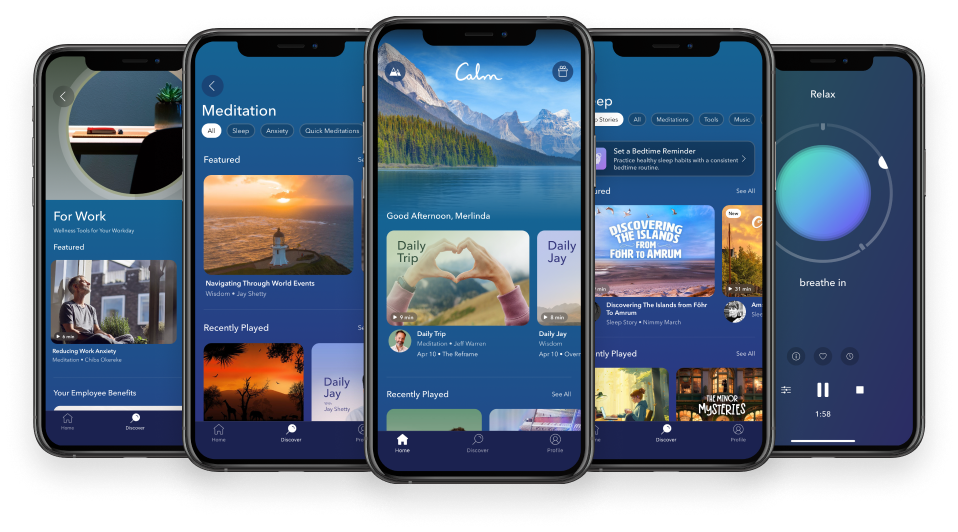
Calm’s meditation library is its foundation. Sessions are organized by categories such as sleep, anxiety, stress, focus, personal growth, and relationships. The app includes structured programs for beginners, starting with 7 Days of Calm and progressing to 21 Days of Calm and a 30-day “How to Meditate” course led by instructor Jeff Warren.
Source: Calm
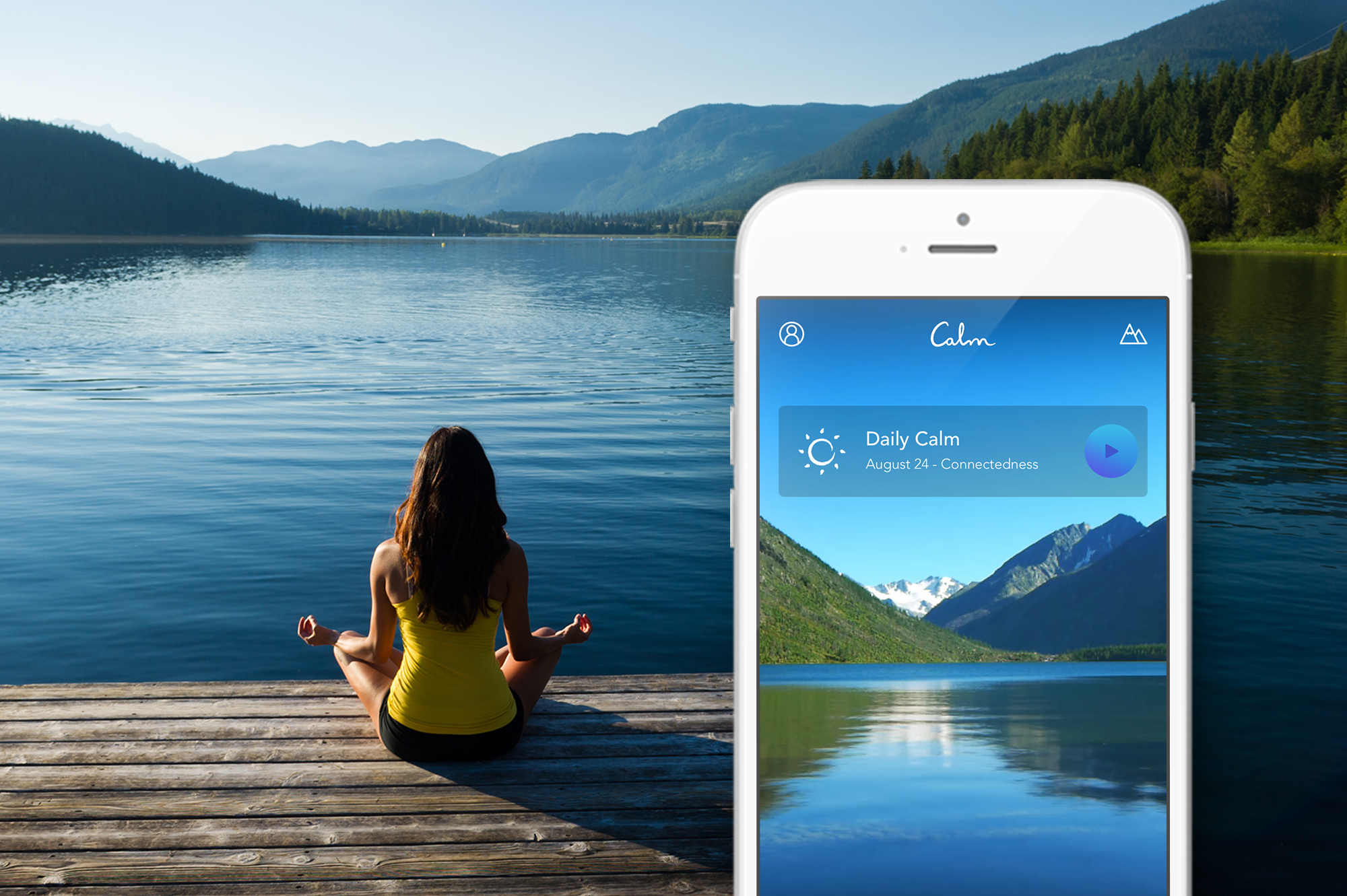
Session lengths are flexible, typically ranging from 3 to 30 minutes. The Daily Calm is a cornerstone feature: a new 10-minute guided meditation released every morning, each exploring a different theme. These daily sessions are led by Tamara Levitt, Calm’s Head of Mindfulness, and are designed to help users build a consistent practice.
Beyond guided options, the app offers unguided timed meditations where users can sit in silence or with background nature sounds for any chosen duration. For moments of acute stress, the “Panic SOS” and “Emergency Calm” sessions provide quick relief. Topic-specific sessions cover themes from anxiety management to sleep preparation, including titles like “Letting Go into Sleep.”
Source: Calm
The approach is rooted in Mindfulness-Based Stress Reduction (MBSR), using techniques like body scans, walking meditations, and breathing exercises. Guided meditations feature calming background sounds and visuals, while unguided options let users meditate in silence or with ambient nature scenes.
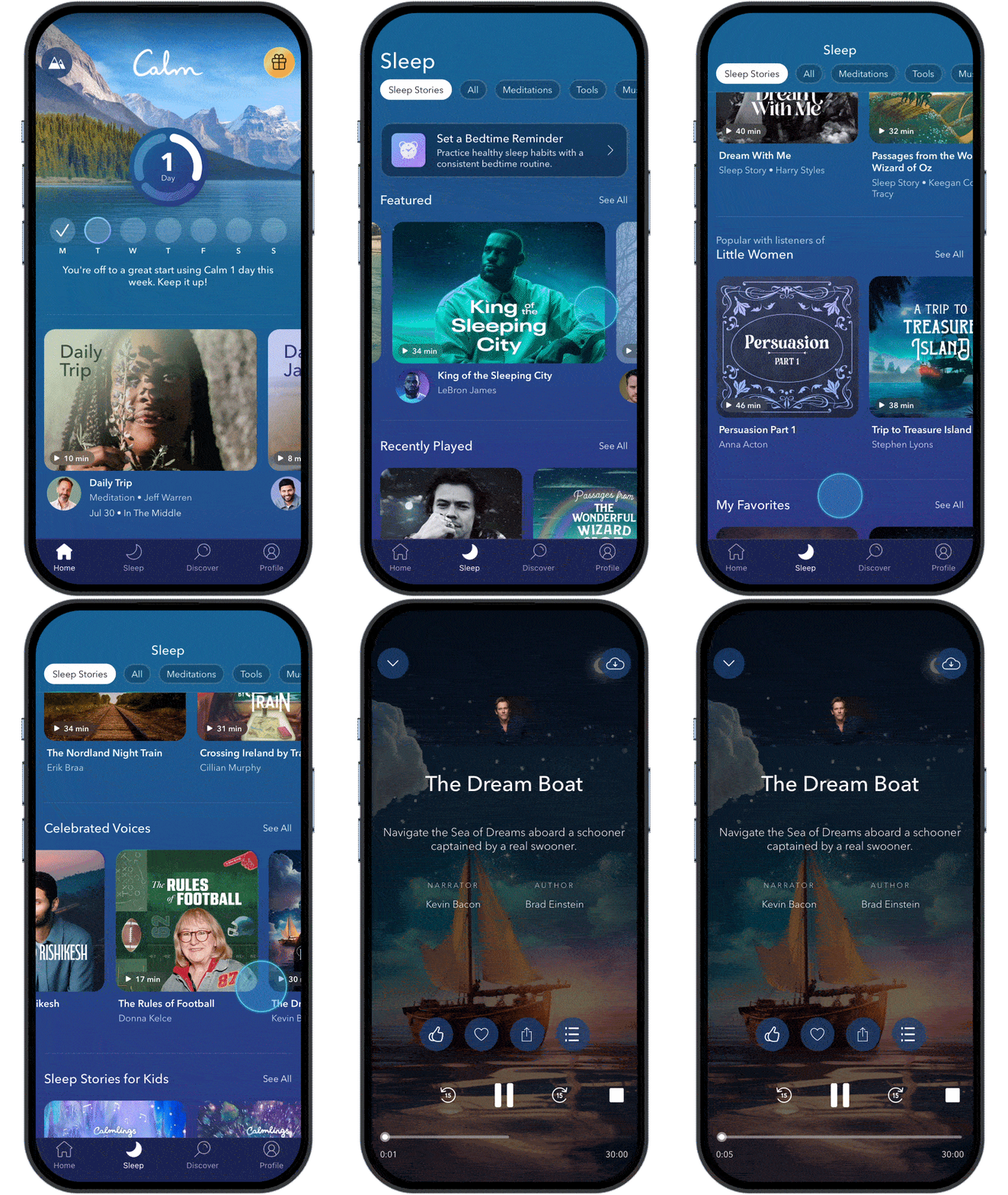
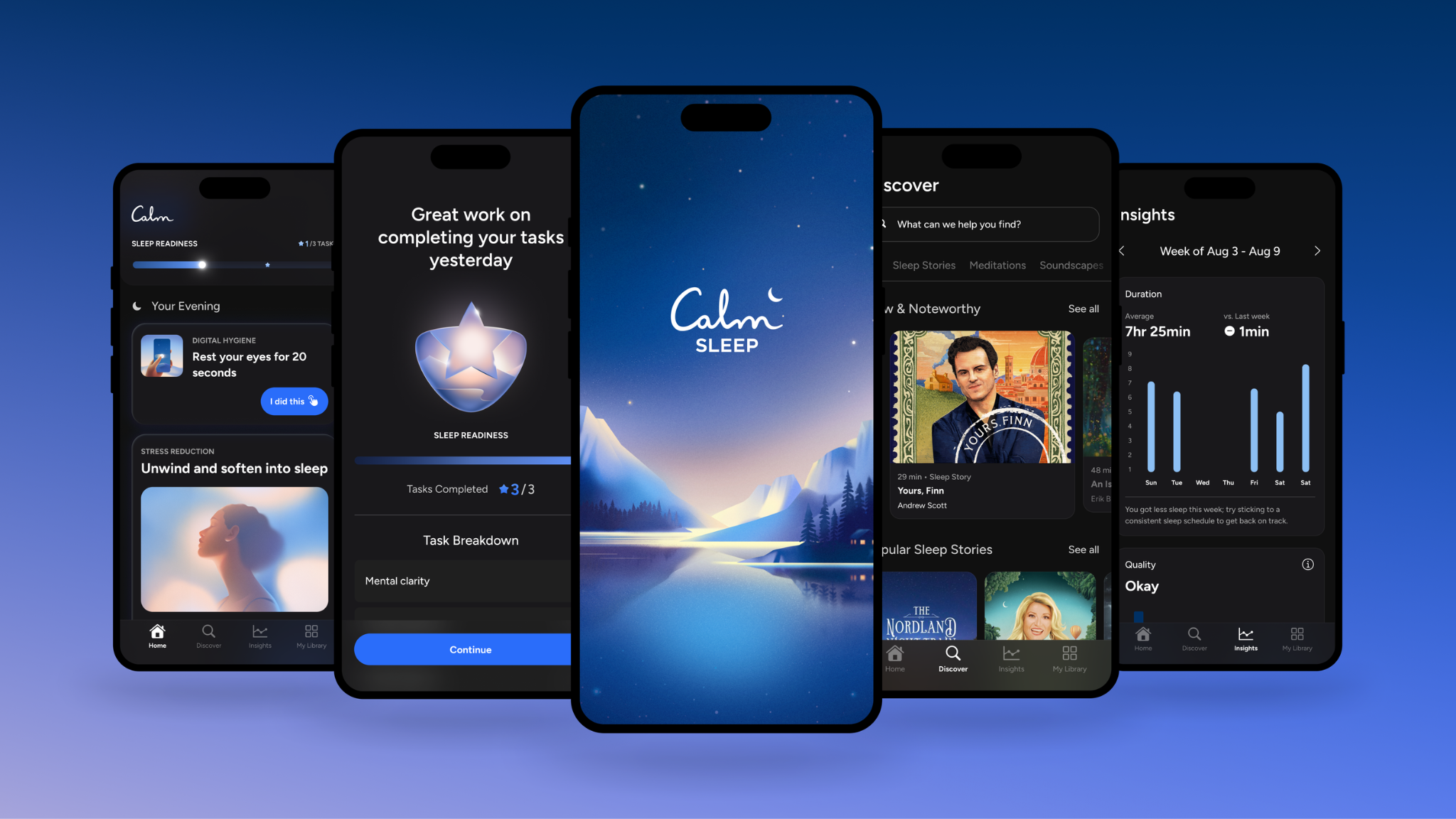
Sleep Stories are one of Calm’s signature features. These are bedtime stories for adults (and children), typically 20 to 40 minutes long, narrated by well-known voices including Matthew McConaughey, Harry Styles, Cillian Murphy, and Laura Dern. The stories are designed to be just engaging enough to take a listener’s mind off their thoughts without keeping them awake. Narratives include gentle journeys through landscapes, retellings of classic literature, and non-fiction pieces on nature.
Source: Calm
Beyond Sleep Stories, the sleep section includes guided sleep meditations that use techniques like body scans to prepare the body for rest, curated sleep music playlists featuring ambient and lo-fi tracks, and nature soundscapes such as rain and ocean waves. The app also includes “Sleep Remixes,” hour-long, dreamlike versions of popular songs from artists like Ariana Grande and Post Malone, created in partnership with Universal Music Group.
Source: Calm
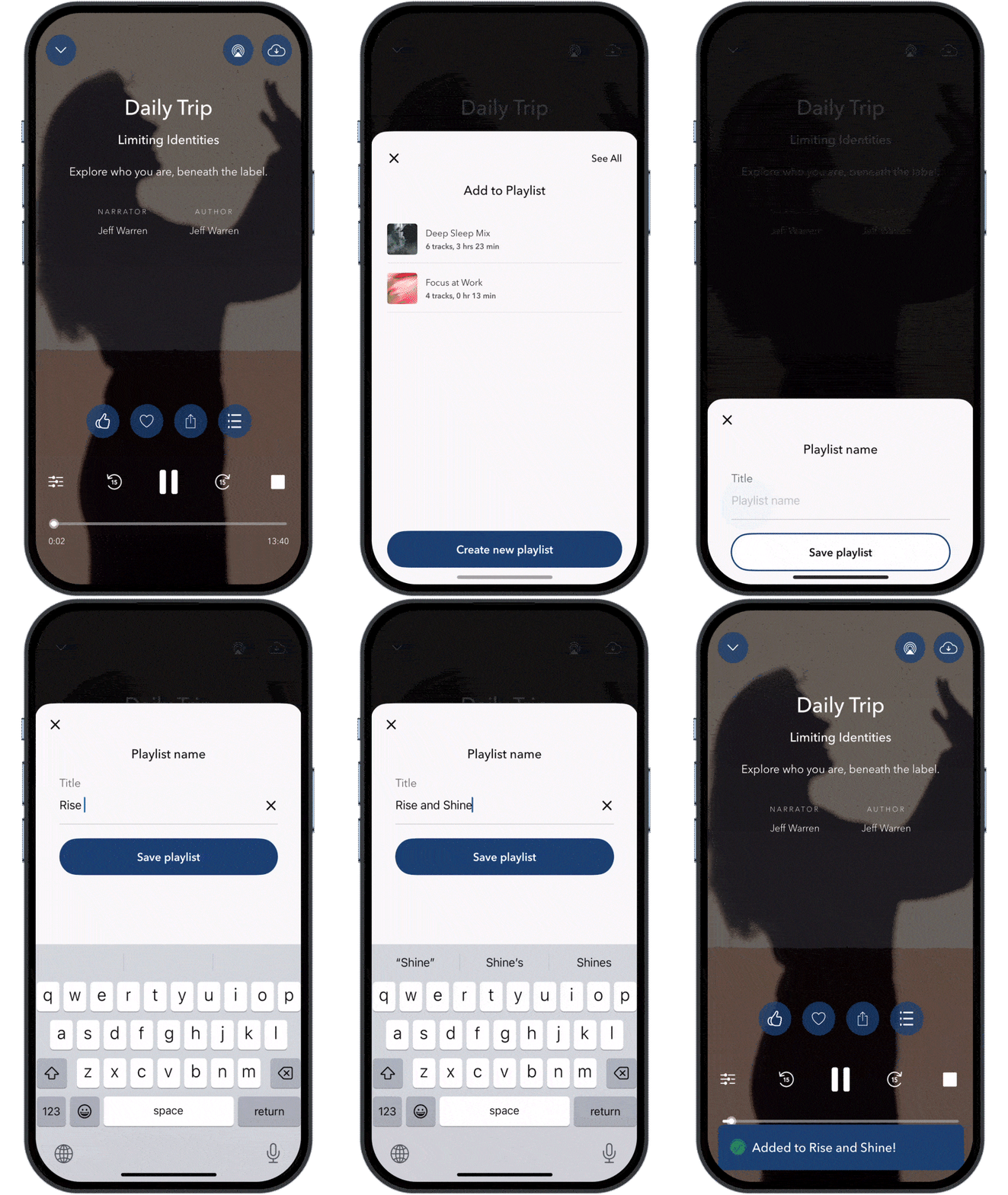
Users can set sleep timers, adjust background scene sounds, and set bedtime reminders to build consistent routines. The Calm Kids section offers age-appropriate Sleep Stories and lullabies for children.
Calm’s music library goes beyond generic playlists. Tracks are categorized by purpose (Focus and Flow, Uplift) and by genre (Piano, Ambient and Atmospheric, Electronic, Classical and Strings). The collection includes original compositions, exclusively licensed tracks, and collaborations with artists like Moby, who released an exclusive ambient album on the platform, and Alanis Morissette, who released a meditation album alongside Calm.
Source: Calm
Focus music features steady rhythms intended to support concentration without drawing attention away from work. Relaxation music tends toward slow tempos around 60 beats per minute, which research suggests can help slow heart rate and breathing. The soundscapes section provides high-quality recordings of natural environments that can be played on a loop.
Users can adjust scene volume independently from music volume, enable autoplay to queue the next track, and set sleep timers for nighttime listening. Some of the music is created using psychoacoustic and sleep-science principles through collaborations with sound-design specialists like Tom Middleton.
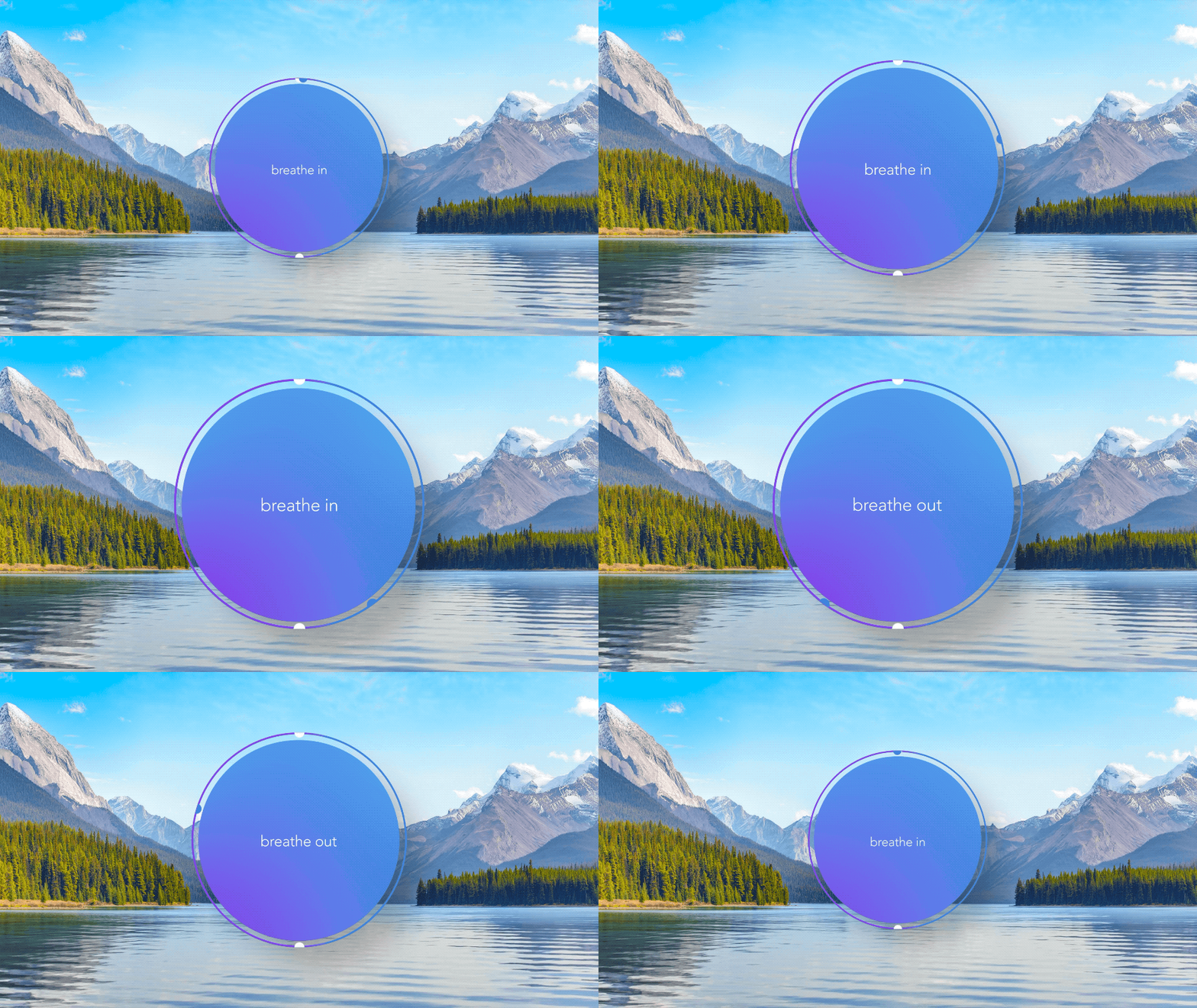
The “Breathe” feature centers on the “Breathe Bubble,” a visual animation that guides the user’s breathing rhythm. Six themed breathing exercises are available: Relax, Balance, Restore, Focus, Energize, and Unwind. Users can customize the experience with adjustable speed (4, 6, or 8 breaths per minute), haptic feedback, and timers up to 60 minutes.
Source: Calm
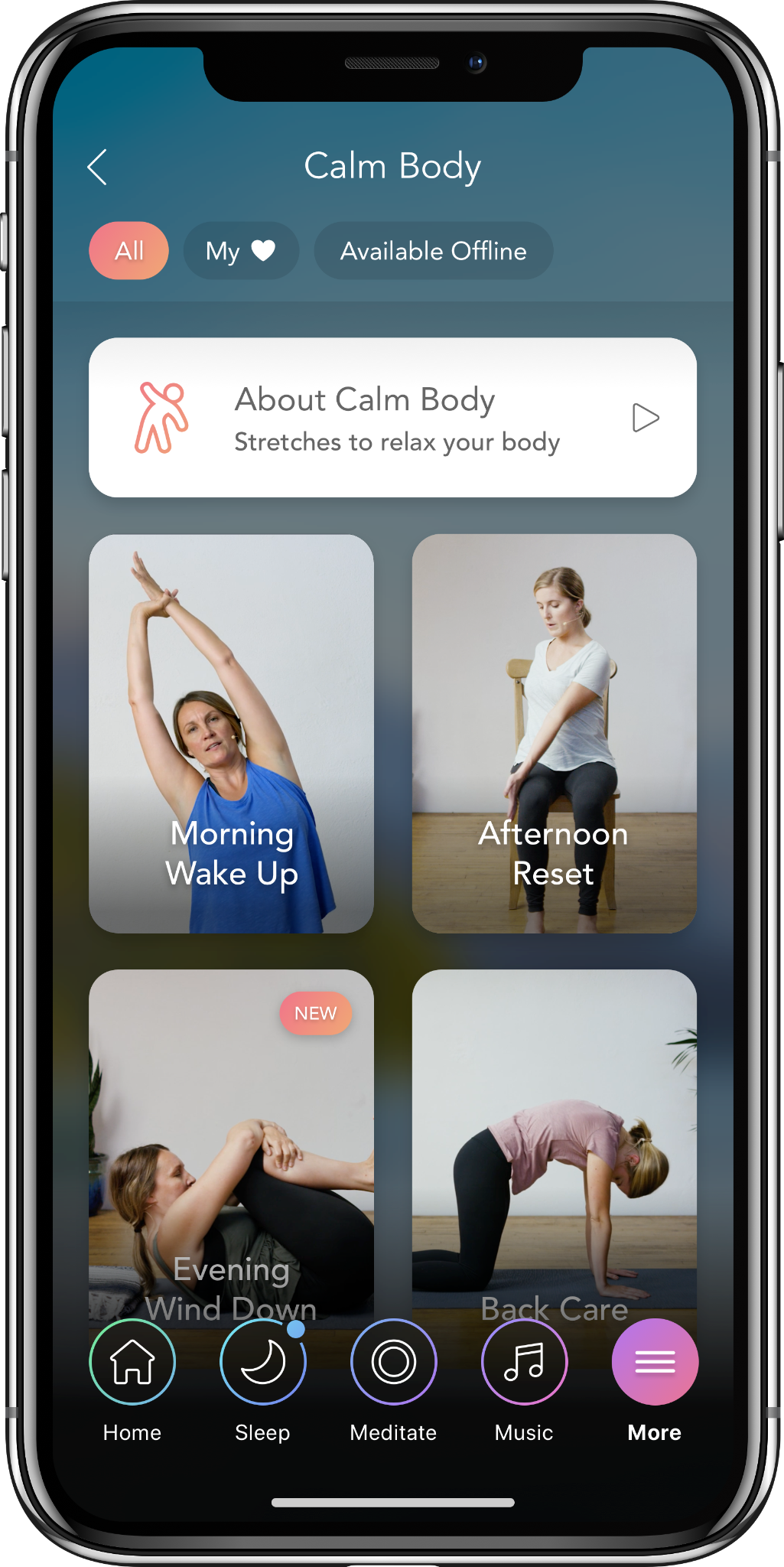
The “Movement” section (also called “Calm Body”) offers approximately 10-minute guided video sessions of gentle stretching and mindful movement. Sessions are organized by time of day: Morning Wake Up, Afternoon Reset, Evening Wind Down, and specific targets like Back Care. The exercises are designed to be accessible to all fitness levels.
Source: Calm
Calm Masterclasses are audio classes taught by experts and public figures, covering topics like “Breaking Bad Habits” with Dr. Judson Brewer, “Creative Living Beyond Fear” with Elizabeth Gilbert, and “Stoic Wisdom for Modern Life” with Ryan Holiday. These run longer than typical meditations and provide a more educational, lecture-style experience. LeBron James leads a series on mental fitness. An introductory session is typically free, with the full series requiring a premium subscription.
Calm’s free tier includes a selection of content: some daily meditations, a breathing exercise, a mood tracker, and a limited number of Sleep Stories and music tracks. The free content provides a sample but is notably restricted compared to the full library.
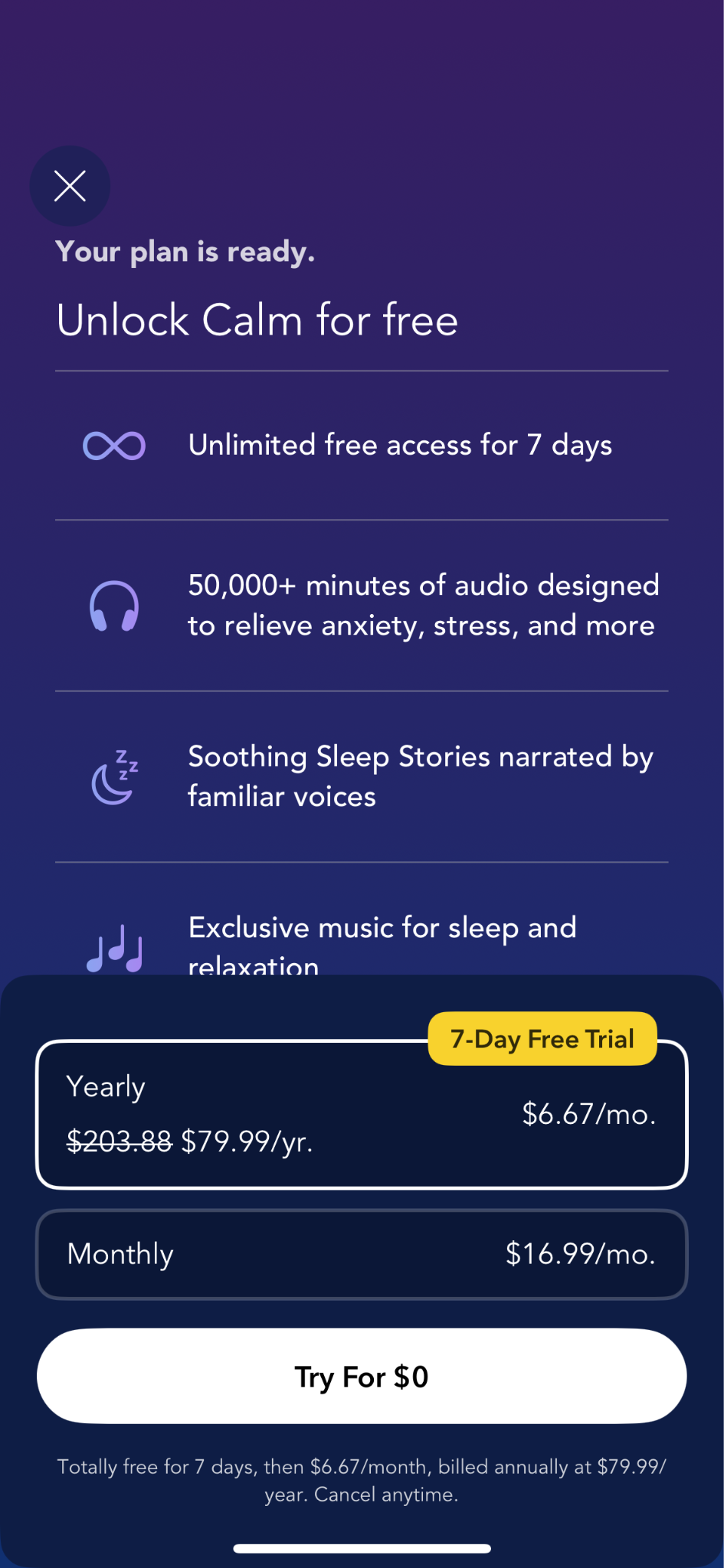
Calm Premium (Annual): $69.99 - $79.99 per year after a 7-day free trial. This unlocks the complete library of guided meditations, all Sleep Stories (with new ones added weekly), exclusive music, Masterclasses, Calm Body sessions, and the Daily Calm archive.
Calm Premium (Monthly): $16.99 per month, available through the Apple App Store and Google Play.
Calm for Life: $499.99 as a one-time payment for permanent access to all premium content.
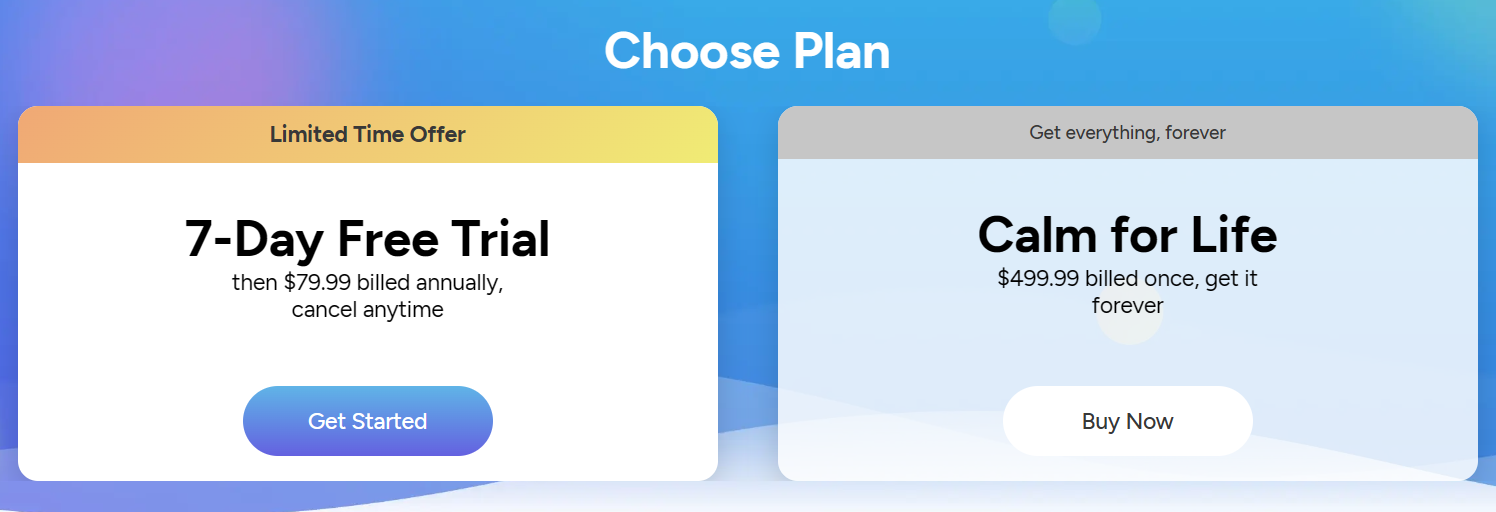
Subscriptions can be canceled at any time, and the annual plan auto-renews after the free trial unless canceled. The Lifetime plan is a one-time, non-refundable purchase.
While Calm excels as a self-guided wellness tool, several limitations become apparent depending on what a user is looking for. These reflect the boundaries of what any consumer meditation app can realistically provide.
Self-Help Without Professional Guidance: Calm offers tools for relaxation, stress reduction, and better sleep, but it doesn’t provide clinical assessment, diagnosis, or treatment. For someone dealing with persistent anxiety, depression, or trauma, guided meditation, no matter how well-produced, isn’t a substitute for working with a licensed therapist. The app has no mechanism for identifying when a user’s symptoms require professional intervention, and it doesn’t connect users to mental health providers.
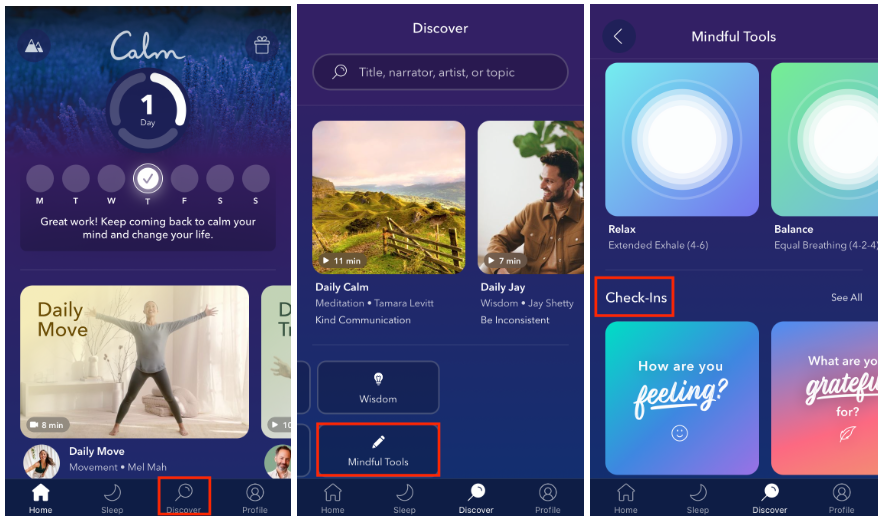
No Outcome Tracking Beyond Basics: The app includes streak counters, session tallies, and simple mood check-ins, but these don’t measure clinical outcomes. There’s no way to track whether symptoms of anxiety or depression are actually improving over time using validated instruments. The mood tracker captures a snapshot, but it doesn’t provide the kind of longitudinal data that could inform whether a user’s approach to managing their mental health is actually working.
Source: Calm
Limited Free Content Creates an Incomplete Experience: While the free tier gives users a taste of what Calm offers, it’s quite restricted. With only a handful of meditations, one Sleep Story, and limited music tracks available without paying, the free version functions more as a preview than a usable product. Users looking for a robust free option may find themselves hitting the paywall quickly.
One-Size-Fits-Most Approach: Calm’s content is broad and accessible, which is a strength for general audiences but a limitation for users with specific needs. In the core Calm app, there’s no personalized treatment path, no adaptive recommendations based on symptom severity, and no feedback loop that adjusts content based on how a user is actually doing. The onboarding quiz personalizes initial suggestions, but ongoing content selection remains largely manual.
Subscription Cost: At $69.99 - $79.99 per year (or $16.99 per month), Calm is a meaningful financial commitment. While the 7-day free trial lets users explore the full library before deciding, the ongoing cost may be a consideration for users who are still building their mindfulness habit and aren’t sure how often they’ll use the app.
Source: Calm
These limitations aren’t failures of the app. They reflect the natural boundaries of a consumer wellness tool. Calm is designed for everyday mindfulness, not clinical mental health treatment. But for users whose needs extend beyond relaxation into the territory of clinical support, these boundaries point toward a different kind of solution entirely.
For some people, a meditation app is exactly what they need: a tool to unwind, build a daily mindfulness habit, and sleep better. But for others, the issues that bring them to search for a wellness app, such as chronic anxiety, persistent low mood, or difficulty functioning, require more than self-guided content. They require professional therapy.
This is where CarePaths enters the picture. Not as an alternative to Calm, but as the platform behind the kind of therapy that actually tracks whether treatment is working. CarePaths is a cloud-based Electronic Health Record (EHR) and practice management system built specifically for behavioral health professionals. Founded in 2000 by clinical psychologists Dr. Geoff Gray and Dr. Maureen Hart, it was designed to help therapists deliver better care while reducing administrative overhead.
The feature that sets CarePaths apart from other practice management platforms is its integrated Measurement-Based Care (MBC) system, developed in collaboration with Dr. Bruce Wampold, a leading psychotherapy researcher. MBC automates the process of sending validated assessments to patients at regular intervals, tracking outcomes across domains like psychological distress, well-being, loneliness, and the therapeutic relationship itself.
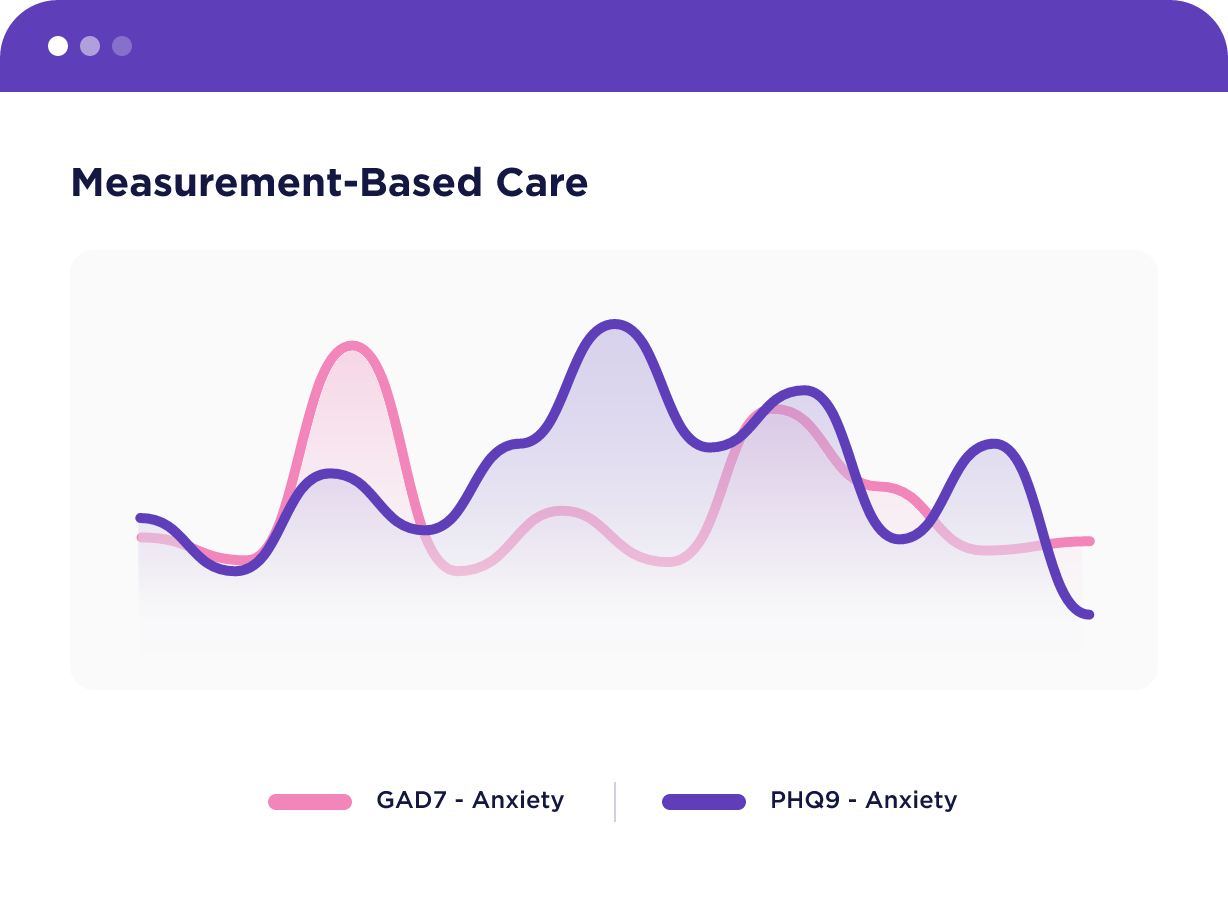
Patients receive brief assessment prompts through the CarePaths Connect mobile app or patient portal, broken into short sets sent on different days of the week. Monday might cover anxiety and depression, Wednesday well-being and loneliness, Friday the therapeutic alliance. Responses are scored automatically and displayed as visual progress graphs at the top of the patient’s chart, giving both therapist and patient a clear picture of how treatment is progressing.
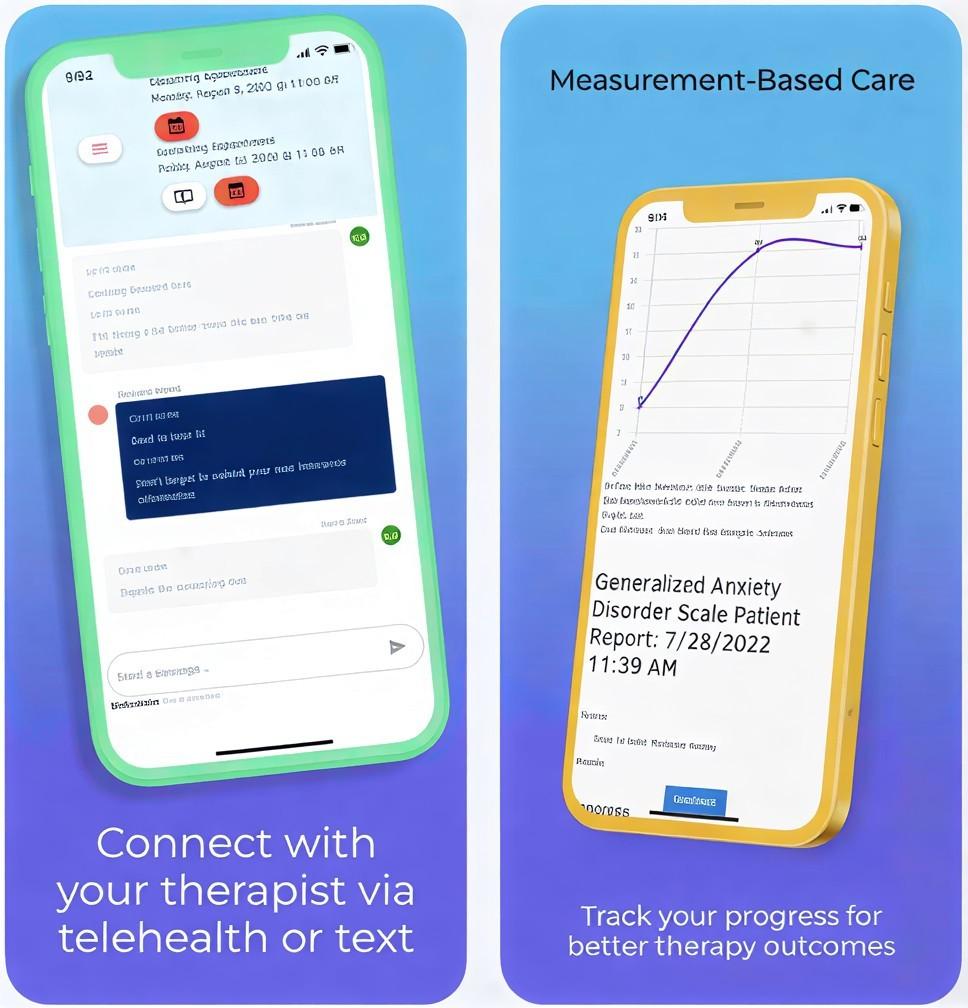
This data-driven approach allows therapists to identify when a patient is stagnating or worsening, adjust their approach accordingly, and demonstrate the effectiveness of treatment to patients. A growing body of research supports the finding that therapy informed by regular outcome measurement tends to lead to better results than therapy without it. CarePaths makes implementing this practice straightforward and nearly effortless for the clinician.
The MBC feature is free for up to 30 clients per therapist, making it accessible even for solo practitioners just beginning to adopt outcome monitoring.
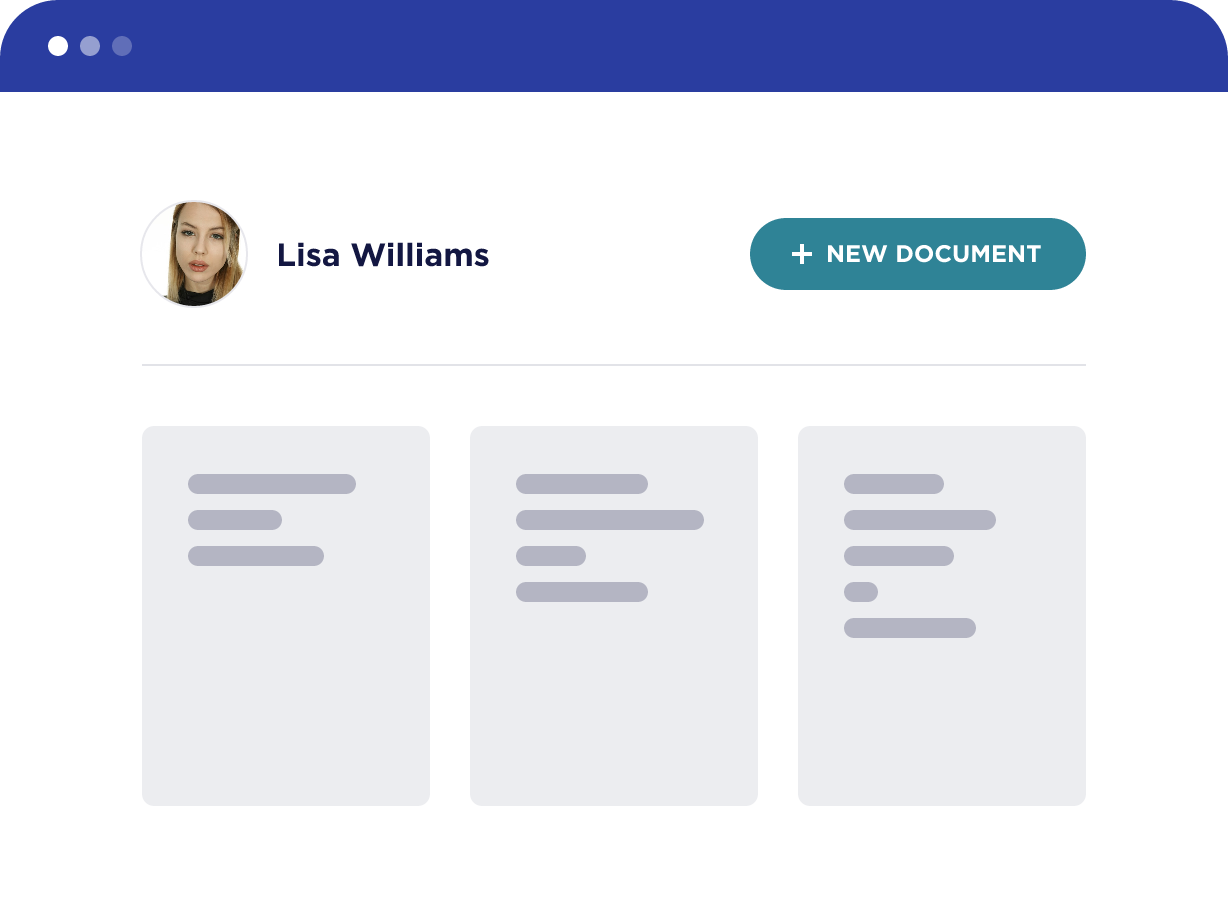
Beyond outcome tracking, CarePaths provides a full suite of practice management tools. The EHR includes an extensive library of customizable clinical templates for intake assessments, progress notes, and treatment plans, with the ability to pre-populate new notes from previous sessions. AI-assisted session summaries can generate notes from teletherapy recordings, further reducing documentation time.
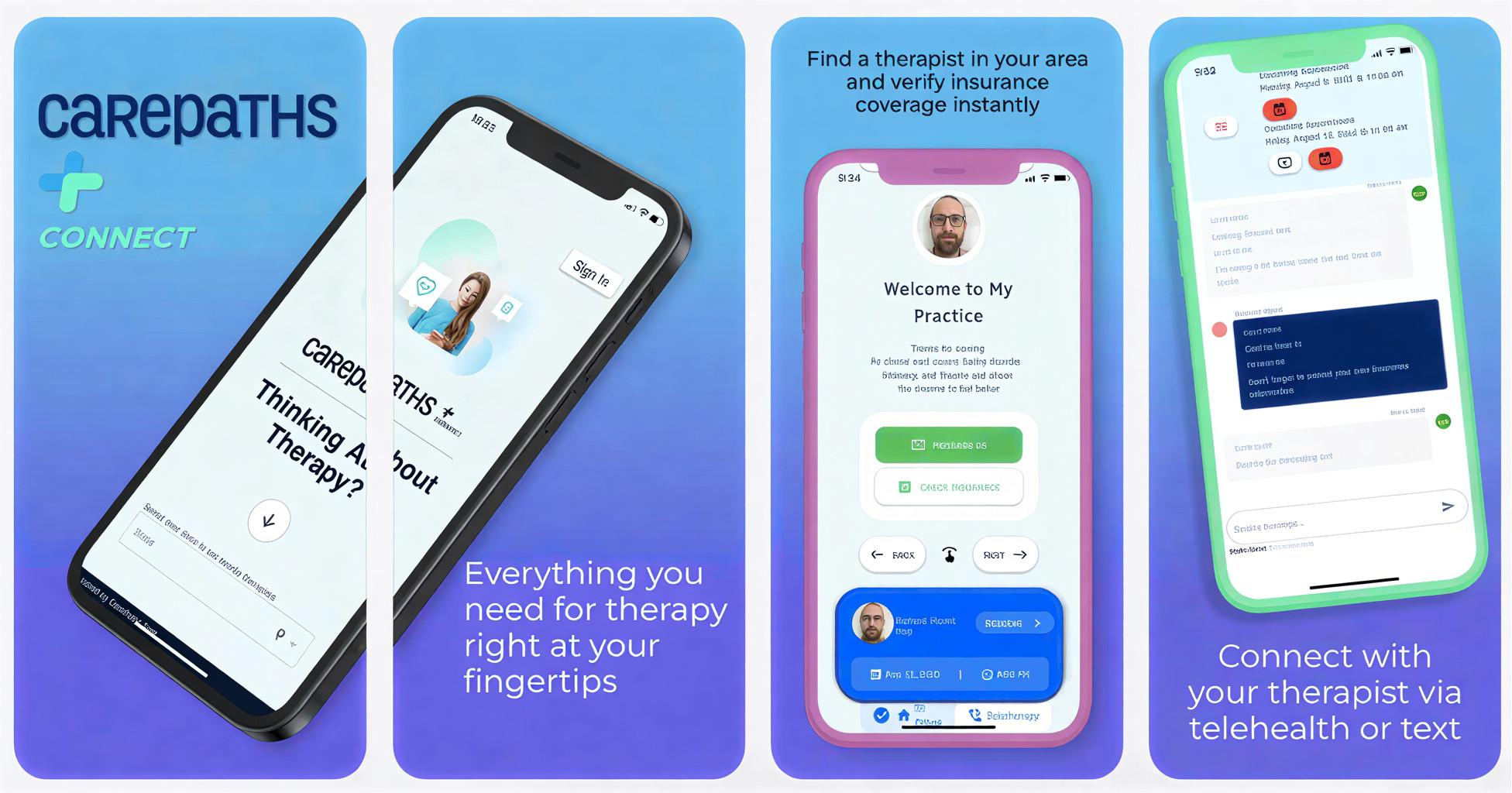
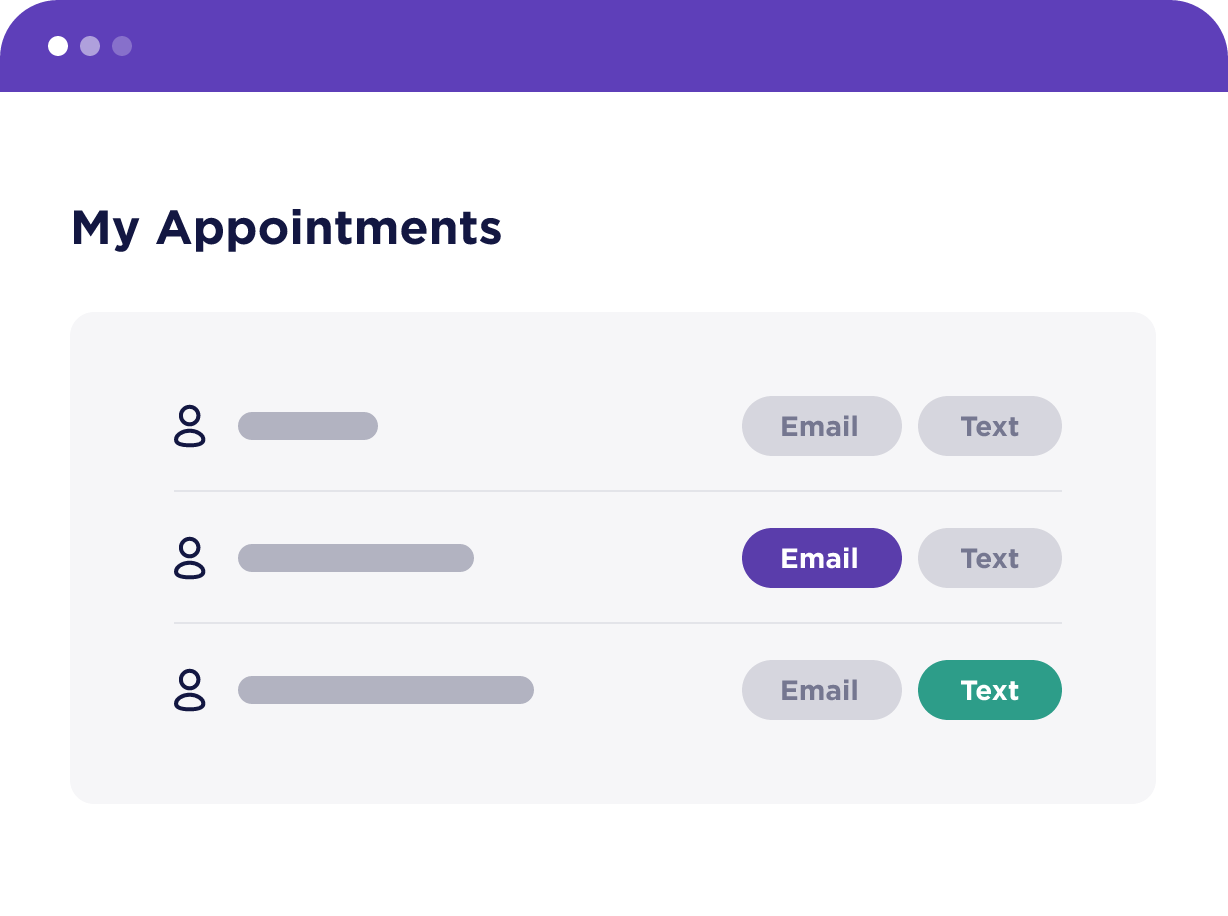
The scheduling system supports individual, group, and recurring appointments with automated reminders via SMS, email, and phone calls. Insurance eligibility verification and electronic claims submission are included in the base subscription, with charges automatically generated from completed clinical documents. The patient portal and CarePaths Connect app allow clients to self-schedule appointments, complete intake paperwork, pay bills, communicate securely with their therapist via encrypted messaging, and view their own progress graphs.
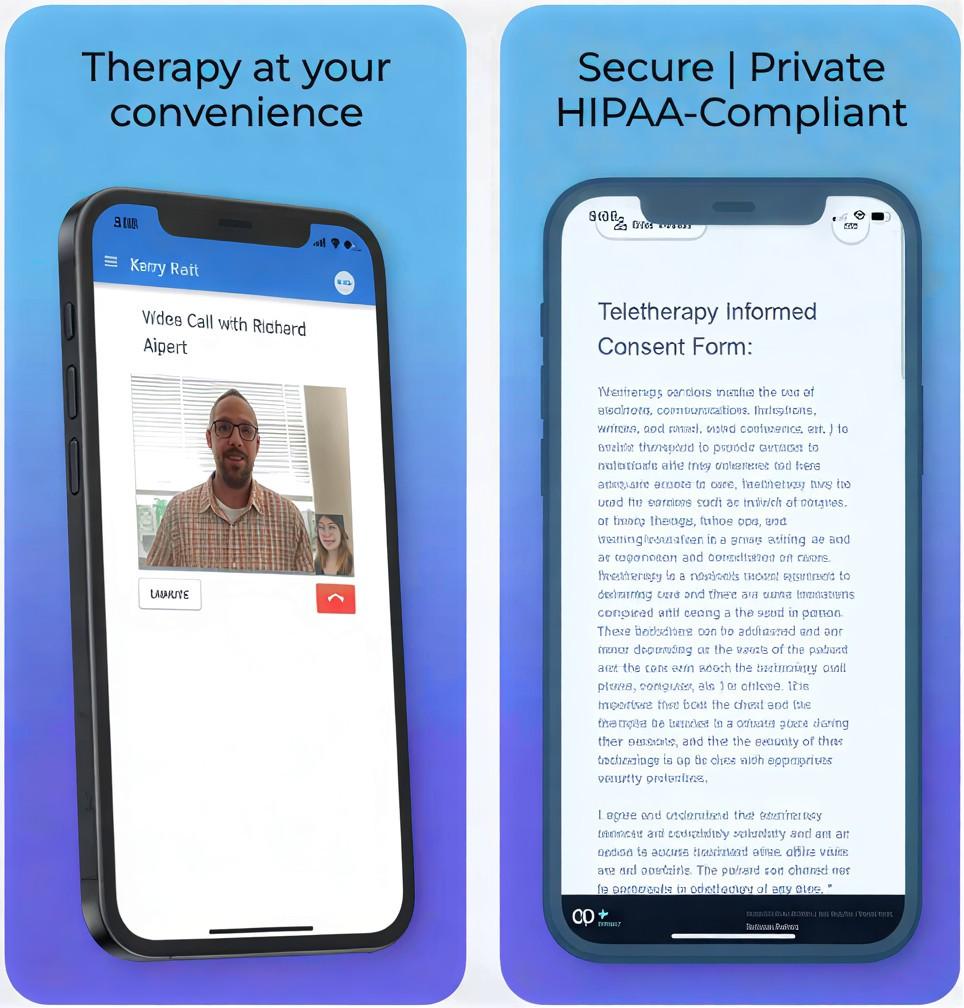
Integrated teletherapy supports both individual and group sessions through HIPAA-compliant video, accessible from any web browser or the mobile app. E-prescribing is available for psychiatry practices through a partnership with DrFirst.
CarePaths’ pricing is straightforward for the EHR market. First, there’s a free measurement-based care plan available for up to 30 clients per clinician. For practitioners just starting out, a $10 per month plan is available for up to 15 sessions per month. The standard plan is $49 per month per licensed therapist and includes the complete practice management system, clinical documentation, teletherapy, electronic billing with free claims, appointment reminders, eligibility verification, the patient portal, mobile app, AI-generated notes, and Measurement-Based Care.
By Bruce Wampold PhD
Complete Practice Management System
Getting Started?
A psychiatry plan at $98 per month adds e-prescribing capabilities. Group practices receive discounted rates, and special pricing is available for non-profits, academic centers, and students. A 30-day free trial requires no credit card.
All EHR Features Plus E-Prescribing Software
| Aspect | Calm | CarePaths |
|---|---|---|
| What it is | Consumer mental wellness app | Behavioral health EHR and practice management platform |
| Who uses it | Individuals seeking relaxation, sleep help, and mindfulness | Licensed therapists, psychologists, psychiatrists, counselors |
| Primary purpose | Self-guided meditation, sleep, and stress relief | Clinical documentation, billing, telehealth, and outcome tracking |
| Mental health approach | Self-help content (guided meditations, stories, music) | Professional therapy with Measurement-Based Care |
| Outcome tracking | Basic mood check-ins and session streaks | Validated clinical assessments with visual progress graphs |
| Personalization | Goal-based content suggestions | Data-driven treatment adjustments based on patient outcomes |
| Pricing | $69.99 - $79.99/year or $16.99/month (consumer subscription) | Starting at $10/month per therapist (practice subscription) |
| Free option | Limited free content with 7-day premium trial | Free MBC for up to 30 clients; 30-day full trial |
| Best for | Everyday stress management and sleep improvement | Therapists delivering evidence-based, measurable care |
Calm and CarePaths serve different roles in the mental health landscape, and for many people, both have a place.
👉Choose Calm if you're looking for an accessible, well-produced tool to support your daily well-being. The app is at its best when used as a consistent part of a wellness routine: a 10-minute morning meditation, a Sleep Story to wind down at night, breathing exercises during a stressful moment. For everyday mindfulness, relaxation, and sleep support, Calm delivers a polished experience backed by a content library that keeps growing.
👉Consider CarePaths if you're a therapist looking to deliver more effective care, or if you're someone who has realized that self-help tools aren't enough and you're ready to work with a professional. CarePaths equips behavioral health providers with the tools to track whether therapy is actually working, using validated assessments and visual outcome data that keep both therapist and client informed. For clinicians, it's a complete practice platform at an accessible price point. For prospective therapy clients, it represents the kind of data-informed care that can make a measurable difference.
Learn more about CarePaths here.
A wellness app and professional therapy aren't mutually exclusive. Many people benefit from using both: an app for daily mindfulness habits and a therapist for deeper, guided work on the issues that matter most. The question isn't which one is better. It's which one you need right now, and whether you might need both.